Every day, the average American tosses out 4.5 pounds of trash, most of which could have been avoided with smarter choices. Two popular approaches have emerged to tackle this problem: the zero waste lifestyle, which focuses on eliminating trash altogether, and ethical shopping, which prioritizes buying from responsible sources. While these paths might seem different, they both lead toward a healthier planet, and understanding how they work can help you build a sustainable routine that actually fits your life.
Table of Contents
- Understanding the Sustainability Movement
- What Zero Waste Living Really Means
- The Ethical Shopping Approach
- Where These Approaches Overlap and Differ
- Building Your Personal Sustainable Strategy
- The Bigger Picture Impact
- Your Sustainable Journey Starts Here
- Common Questions About Zero Waste and Ethical Shopping
Understanding the Sustainability Movement
About 8 million tons of plastic end up in our oceans every single year, which is roughly the same weight as 800 Eiffel Towers. This shocking reality helped spark two major movements that are changing how people think about their daily choices. The zero waste lifestyle and ethical shopping both grew from people wanting to do something real about environmental problems, but they took different paths to get there.
How Zero Waste Got Started
The zero waste lifestyle really took off in the early 2000s when a woman named Bea Johnson showed that a family of four could fit an entire year’s worth of trash into a single mason jar. Her blog and book inspired thousands of people to rethink their relationship with garbage. The movement focuses on refusing, reducing, reusing, recycling, and rotting (composting) to keep stuff out of landfills.
By 2010, zero waste communities started popping up in cities across the world. People began carrying reusable bags, metal straws, and glass containers everywhere they went. The goal was simple but powerful: send as little as possible to the landfill.
- Zero waste aims to eliminate trash through lifestyle changes
- Focuses on the five Rs: Refuse, Reduce, Reuse, Recycle, Rot
- Started gaining mainstream attention around 2008-2010
- Emphasizes personal responsibility for waste reduction
The Rise of Ethical Shopping
Ethical shopping grew from a different concern: how products are made and who makes them. This movement picked up speed in the 1990s when people learned about sweatshops and unfair labor practices. By the 2010s, ethical consumerism expanded to include environmental impact, animal welfare, and corporate responsibility. Instead of focusing on what happens after you buy something, ethical shopping looks at what happens before.
This video breaks down some common sustainable swaps and helps you understand what actually makes a difference. It’s a great example of how both movements sometimes overlap but have different priorities.
- Ethical shopping considers the entire supply chain
- Looks at worker conditions, environmental practices, and company values
- Grew from fair trade movements in the 1990s
- Focuses on making better purchasing decisions
Where We Are Today
Today, both movements have millions of followers worldwide. A 2022 study found that 73% of people under 40 say they try to buy from companies that match their values. Meanwhile, the zero waste movement has helped reduce household waste by an average of 40% among active participants. Organizations like PureHabitat Initiative work to make both approaches more accessible through resource sharing and environmental education programs that help communities adopt sustainable practices that actually stick.
| Aspect | Zero Waste Lifestyle | Ethical Shopping |
|---|---|---|
| Main Focus | Reducing trash output | Responsible purchasing |
| Started | Early 2000s | 1990s |
| Primary Goal | Eliminate landfill waste | Support fair practices |
| Key Action | Refuse and reuse | Research and choose |
| Adoption Rate | 15% actively practicing | 45% consider regularly |
The numbers show that more people think about ethical shopping than actually practice zero waste, probably because it feels easier to change what you buy than to change your entire lifestyle. But here’s the thing: both approaches work better when combined. You can choose products made ethically and also work to reduce your overall consumption and waste.
- 73% of millennials prefer sustainable brands
- Zero waste practitioners reduce waste by 40% on average
- Global ethical market worth over $120 billion
- Both movements growing 20% annually
What Zero Waste Living Really Means
The average American throws away about 4.5 pounds of trash every single day, which adds up to over 1,600 pounds per year. Zero waste living tries to change that by focusing on one simple idea: stop making trash in the first place. It’s not about being perfect or never throwing anything away again. It’s about making better choices that keep stuff out of landfills and oceans. The movement has grown a lot in recent years, but many people still don’t understand what it actually involves or how to start.
What Zero Waste Living Really Means
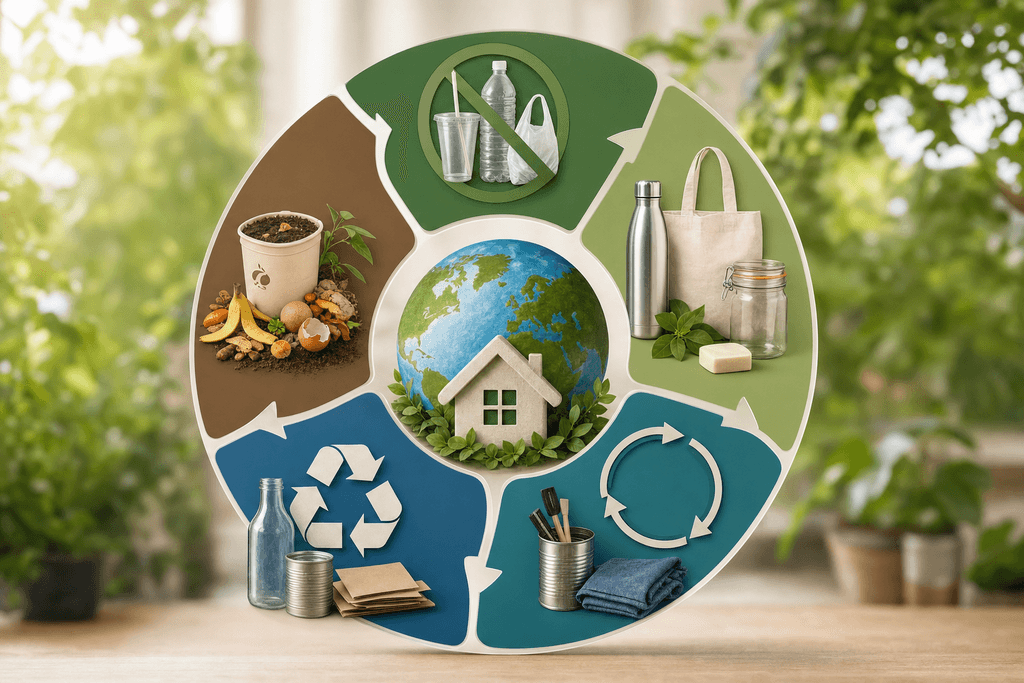
The zero waste lifestyle follows five main principles called the five R’s. These aren’t just random rules someone made up. They’re a practical framework that helps you make decisions about what comes into your home and what happens to it after.
- Refuse what you don’t need (like plastic bags, straws, and junk mail)
- Reduce what you do need (buy less stuff overall)
- Reuse what you already have (repair things instead of replacing them)
- Recycle what you can’t refuse, reduce, or reuse (but only as a last resort)
- Rot the rest (compost food scraps and yard waste)
Daily habits look different for everyone, but they usually include things like shopping at bulk stores with your own containers, composting food scraps, and carrying reusable bags and water bottles everywhere. Some people get really into it and fit a whole year’s worth of trash into a single mason jar. Most people just try to cut down their waste bit by bit. PureHabitat Initiative’s resource sharing programs help communities access the tools they need for these practices, like compost bins and reusable container systems, without everyone having to buy their own.
The biggest challenge is that our whole system isn’t set up for zero waste. Everything comes wrapped in plastic. Stores don’t always let you bring your own containers. Sometimes the zero waste option costs more money or takes more time, which not everyone can afford.
The Ethical Shopping Approach
Ethical shopping takes a different angle on the same problem. Instead of focusing on how much waste you create, it looks at where your money goes and what happens before a product reaches you. When you buy something, you’re basically voting with your wallet for how that thing should be made. Ethical shopping means choosing products made by companies that treat workers fairly, don’t trash the environment, and operate honestly. It’s about the whole supply chain, not just what happens after you’re done with something.

The Ethical Shopping Approach
The main factors people consider include fair wages for workers, safe working conditions, environmental standards during production, and honest business practices. A shirt might be cheap, but if it was made by someone working 16-hour days for pennies in a dangerous factory, that’s a real cost that just isn’t showing up on the price tag.
| Certification | What It Means |
|---|---|
| Fair Trade | Fair wages, safe conditions |
| B-Corp | Social and environmental standards |
| USDA Organic | No synthetic pesticides |
| Leaping Bunny | No animal testing |
Supporting local and small businesses often fits into ethical shopping too. These companies usually have shorter supply chains, which means less transportation pollution and more transparency about how things are made. PureHabitat Initiative’s educational programs teach communities how to research companies and make informed choices about where their money goes.
The idea is that if enough people demand better practices, companies will have to change. It’s already happening in some industries. When customers started asking questions about where their coffee came from, more farmers got fair prices. When people stopped buying products tested on animals, companies changed their testing methods.
Where These Approaches Overlap and Differ
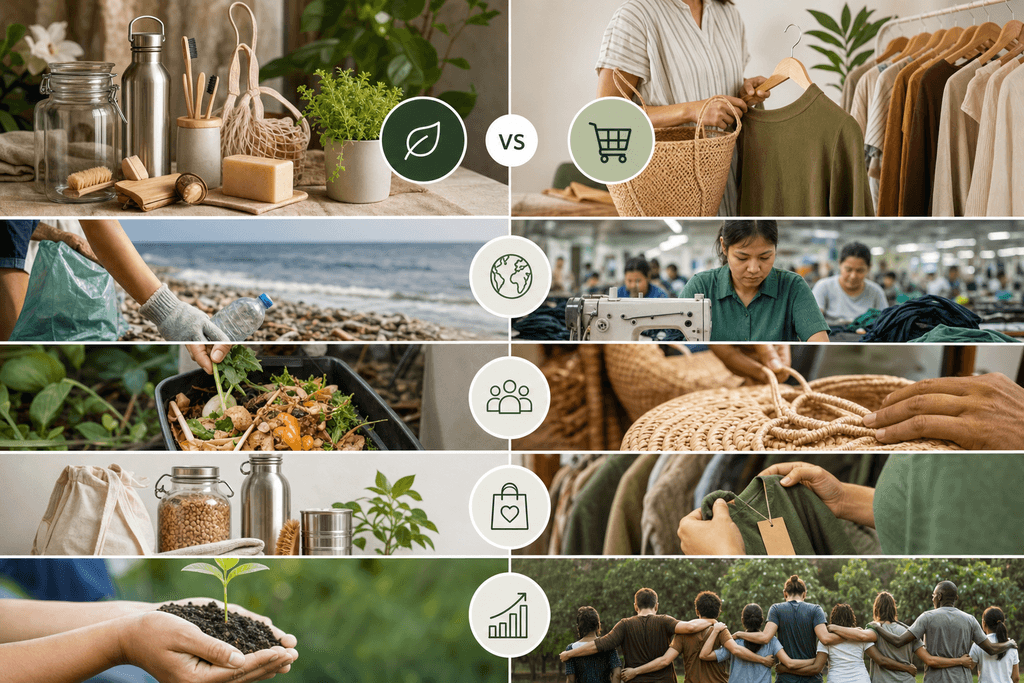
Both zero waste and ethical shopping want to reduce environmental harm, but they go about it in different ways. Zero waste focuses on the end of a product’s life and tries to eliminate trash. Ethical shopping focuses on the beginning and middle, looking at how something is made and who makes it. Sometimes these goals work together perfectly. Other times they clash in ways that make you choose between two good options.
Here’s where it gets tricky. You might find a company that pays workers fairly and uses sustainable materials, but their products come wrapped in layers of plastic packaging. Or you might find package-free bulk items, but you have no idea if the people who grew or made them were treated fairly. These trade-offs happen all the time, and there’s not always a clear right answer.
- A locally-made product might have more packaging than something shipped from far away
- An ethical brand might not offer package-free options
- A zero waste option might come from a company with questionable labor practices
- Organic produce often comes wrapped in plastic to keep it separate from conventional items
The key is learning to navigate these decisions based on your own values and circumstances. Some people prioritize worker rights above all else. Others focus mainly on reducing plastic waste. Most people try to balance both when they can. Research shows that combining both approaches creates the biggest positive impact overall.
Real-world scenarios help clarify these choices. If you need a new water bottle, the zero waste approach says buy one that lasts forever, even if it’s made overseas. The ethical shopping approach says buy one made locally with fair labor, even if it might not last as long. The combined approach says look for a durable bottle made ethically, and if that doesn’t exist or costs too much, pick whichever factor matters most to you right now.
Building Your Personal Sustainable Strategy
You don’t have to choose just one approach or do everything at once. The best strategy is one you’ll actually stick with, which means it needs to fit your life, your budget, and your priorities. Start by looking at what you’re already doing and where you could make the biggest difference with the least effort. Maybe you already buy fair trade coffee, so adding a reusable cup is an easy next step. Or maybe you’re already good at refusing plastic bags, so researching ethical clothing brands makes sense.
Small changes in high-impact areas beat big changes you can’t maintain. Switching to reusable grocery bags prevents hundreds of plastic bags from entering the waste stream each year. Buying one ethically-made coat that lasts ten years beats buying cheap ones every year, both for waste and for worker welfare.
- Pick one area to focus on first (food, clothing, household items, etc.)
- Research both zero waste and ethical options in that area
- Choose 2-3 changes you can make this month
- Track what works and what doesn’t
- Add new changes gradually as old ones become habits
Your budget matters, and anyone who says otherwise isn’t being realistic. Some sustainable options cost more upfront but save money over time. Others just cost more, period. That’s okay. Do what you can with what you have. PureHabitat Initiative’s community empowerment programs connect people with resources and support systems that make sustainable living more accessible, regardless of income level.
Community support makes a huge difference in staying motivated. When you’re surrounded by people trying to do the same things, it’s easier to keep going when it gets hard. You can share tips, swap items, and remind each other why this matters. Measuring progress helps too, even if it’s just noticing that you’re taking out the trash less often or that you know where more of your stuff comes from than you did six months ago.
The Bigger Picture Impact
When you look at the numbers, both zero waste lifestyle and ethical shopping create real change in different ways. A single person switching to zero waste can divert around 400 pounds of trash from landfills each year, while ethical shopping redirects roughly $2,000 annually toward companies with better labor and environmental practices. The question isn’t which approach works better, but how these individual choices add up to shift entire markets and communities toward sustainability.
73% of consumers now consider environmental impact when making purchases, forcing major retailers to change their sourcing practices
Environmental Footprint by the Numbers
The environmental data tells an interesting story about how these approaches complement each other. Zero waste practices directly reduce physical waste, while ethical shopping cuts down on the hidden environmental costs of production.
| Impact Area | Zero Waste | Ethical Shopping |
|---|---|---|
| Waste Reduction | 80-90% decrease | 30-40% decrease |
| Carbon Footprint | 25% reduction | 45% reduction |
| Water Conservation | 15% savings | 60% savings |
Community and Economic Ripple Effects
The social impact goes beyond just environmental numbers. When communities adopt sustainable practices together, they create local economic opportunities and strengthen neighborhood connections. PureHabitat Initiative has seen this firsthand through their community empowerment programs, where groups working together achieve better results than individuals acting alone.
Houston Community Success Story
A neighborhood working with PureHabitat Initiative reduced collective waste by 65% over 18 months while supporting 12 local ethical businesses. Residents reported spending 20% less on household goods through resource sharing programs.
- Local ethical businesses see 30-50% revenue increases when communities shop with intention
- Zero waste initiatives create jobs in repair, refill, and recycling sectors
- Community programs reduce individual costs by sharing resources and knowledge
- Educational workshops increase adoption rates by 3x compared to solo efforts
Driving Market Transformation
Your shopping choices send signals that companies actually track and respond to. When enough people choose package-free products or demand fair labor practices, businesses change their entire supply chains to keep customers.
Major retailers have eliminated over 2 billion plastic bags annually in response to consumer demand for zero waste options
The education component matters more than most people realize. Communities that participate in structured programs like those offered through PureHabitat Initiative show 4x higher long-term adoption rates compared to individuals trying to figure things out alone.
- Educated consumers influence an average of 8 other people in their social circles
- Community-based learning increases confidence in making sustainable choices
- Shared knowledge reduces the trial-and-error period by months
Scaling for Long-Term Change
The real power comes from combining both approaches at a community level. Individual actions matter, but organized efforts create the momentum needed for lasting change. This is where resource sharing and environmental education programs become essential tools for building sustainable habits that stick around for decades, not just weeks.
Your Sustainable Journey Starts Here
Here’s the thing about zero waste lifestyle and ethical shopping – neither one is better than the other. They both help the planet in different ways, and honestly, most people end up doing a mix of both. You might refuse plastic bags at the store while also buying fair trade coffee, and that’s perfectly fine.
The best approach is to start where you are right now. Maybe you live in a small apartment with no space for composting, so ethical shopping makes more sense. Or maybe you have time to make your own cleaning products but can’t afford premium eco-brands. Both paths lead to the same destination.
What really matters is taking small steps consistently. One reusable water bottle saves hundreds of plastic ones over a year. One switch to an ethical brand supports better working conditions for real people. These choices add up faster than you’d think.
The truth is, sustainability gets easier when you’re not doing it alone. That’s where community support comes in. PureHabitat Initiative offers resources and education programs that help people figure out which sustainable practices actually work for their lives, not just what sounds good in theory.
You don’t need to be perfect at either zero waste or ethical shopping. You just need to start somewhere and keep going. The questions below might help you figure out which approach fits your life better right now.
Common Questions About Zero Waste and Ethical Shopping
Making the switch to more sustainable habits brings up a lot of questions, and that’s completely normal. People often wonder if they’re doing enough, spending too much, or if their efforts even matter in the bigger picture. These are the questions we hear most often from folks trying to figure out where to start with zero waste lifestyle choices and ethical shopping practices.
Is zero waste possible for everyone?
The honest answer is that true zero waste is nearly impossible for most people, but that shouldn’t stop you from trying. The goal is progress, not perfection. Start with what you can control, like refusing single-use plastics or composting food scraps, and build from there. Your circumstances, location, and budget will shape what’s realistic for you.
How do I know if a brand is truly ethical?
Look for third-party certifications like Fair Trade, B Corp, or GOTS (Global Organic Textile Standard) rather than just trusting marketing claims. Check if companies publish transparency reports about their supply chains and labor practices. Real ethical brands aren’t afraid to share detailed information about where and how their products are made, including the not-so-perfect parts they’re working to improve.
Which approach saves more money?
A zero waste lifestyle typically saves more money in the long run because you’re buying less overall and choosing reusable items over disposables. Ethical shopping can cost more upfront since quality and fair wages increase prices, but those items usually last longer. The real savings come when you combine both approaches by buying fewer, better-quality items that you’ll actually use.
Can I do both at the same time?
Absolutely, and they actually work really well together. You can prioritize zero waste for everyday items like food containers and cleaning supplies while focusing on ethical shopping for things you need to buy new, like clothing or electronics. PureHabitat Initiative helps communities access resources and education that make both practices easier to adopt simultaneously, without feeling overwhelmed by trying to change everything at once.
What if I can’t find zero waste or ethical options locally?
Start by making do with what you have and getting creative with reusing items you already own. Online shopping can fill gaps, though it adds shipping emissions to consider. Building community connections often reveals local resources you didn’t know existed, like bulk stores, repair cafes, or clothing swaps that neighbors organize informally.
How do I get my family or community involved?
Lead by example rather than lecturing, and make it easy for others to participate without major lifestyle disruptions. Share what you’re learning through casual conversations and invite people to join you for specific activities like a farmers market trip or a DIY cleaning product workshop. Community empowerment programs, like those offered through environmental education initiatives, provide structured ways to bring neighbors together around shared sustainability goals.