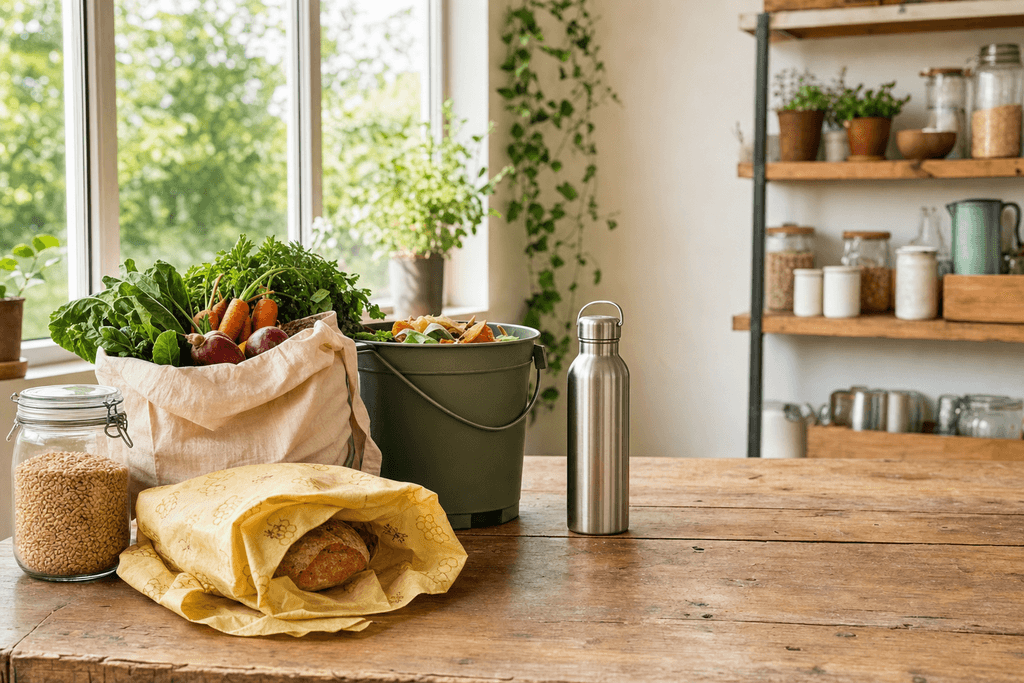
Every time you open your kitchen cabinets, you’re looking at dozens of plastic items that are quietly leaching chemicals into your food and adding to a global waste crisis that won’t disappear for centuries. Most people don’t realize that over 50 plastic items hide in the average kitchen, and the recycling symbols on them are often meaningless since most kitchen plastics never actually get recycled. The good news is that five simple swaps can help you create an eco friendly kitchen and reduce plastic by up to 80% in just a few weeks, and organizations like PureHabitat Initiative are making these sustainable transitions easier through resource sharing and practical environmental education.
Table of Contents
- Why Kitchen Plastic Matters More Than You Think
- Swap 1: Ditch Plastic Wrap for Reusable Covers
- Swap 2: Replace Plastic Utensils with Natural Materials
- Swap 3: Choose Sustainable Food Storage Solutions
- Swap 4: Switch to Plastic-Free Cleaning Tools
- Swap 5: Upgrade to Eco-Friendly Dish Soap and Dispensers
- Wrap-up
- Common Questions About Eco Friendly Kitchen Swaps
Why Kitchen Plastic Matters More Than You Think
Every time you heat up leftovers in a plastic container or use a plastic cutting board, tiny pieces of plastic break off and end up in your food. These microplastics are so small you can’t see them, but scientists have found them in human blood, organs, and even placentas. The kitchen is where most of this contamination happens because heat, acidic foods, and repeated use cause plastic to break down faster. What seems like a harmless plastic spatula or storage container could be slowly adding harmful chemicals to every meal you prepare.
The numbers tell a scary story. Kitchen plastics make up about 40% of all household plastic waste, which means nearly half the plastic you throw away comes from cooking and food storage. Most of this plastic takes over 400 years to break down in landfills, and some types never fully decompose at all.
The Hidden Dangers in Your Cabinets
Not all plastic is created equal, but when it comes to your kitchen, almost all of it poses some risk. Heat is the biggest problem because it causes plastic to release chemicals faster. That’s why using plastic containers in the microwave or dishwasher is particularly concerning, even if the label says it’s safe.
- Plastic cutting boards release microplastics every time you slice food on them
- Non-stick cookware with plastic handles can leach chemicals when heated
- Plastic wrap touching hot food transfers harmful compounds directly into what you eat
- Water bottles left in hot cars release BPA and other toxins into your drinks
This helpful video shows simple ways to start removing plastic from your kitchen today. The good news is that making your kitchen more eco friendly doesn’t require a complete overhaul or spending a fortune on fancy products.
What the Research Shows
Scientists have been studying kitchen plastic for years, and the findings keep getting more concerning. A recent study found that people who regularly use plastic food containers have higher levels of phthalates in their bodies. These chemicals can mess with hormones and have been linked to various health problems.
| Plastic Type | Years to Decompose | Common Kitchen Use |
|---|---|---|
| Plastic bags | 10-20 years | Food storage |
| Plastic bottles | 450 years | Drinks, oils |
| Plastic containers | 400+ years | Leftovers, meal prep |
| Plastic utensils | 200-400 years | Cooking, eating |
Organizations like High Country Conservation have documented how reducing kitchen plastic can significantly lower your family’s exposure to harmful chemicals. The connection between what we cook with and our health is stronger than most people realize.
Why Now Is the Time to Change
The environmental impact goes beyond just your health. Ocean plastic pollution has reached crisis levels, and a huge chunk of it comes from single-use kitchen items. Plastic bags, food wrappers, and disposable utensils make up some of the most common trash found on beaches worldwide.
- Over 8 million tons of plastic enter oceans each year
- Kitchen and food-related plastics account for a large portion of this waste
- Marine animals mistake plastic pieces for food, causing injury and death
At PureHabitat Initiative, we’ve seen communities dramatically reduce their plastic footprint by making simple kitchen swaps. Our resource sharing programs help families access eco friendly alternatives without breaking the bank. The shift away from plastic doesn’t have to be complicated or expensive, and the benefits show up quickly in both your health and the environment around you.
Swap 1: Ditch Plastic Wrap for Reusable Covers
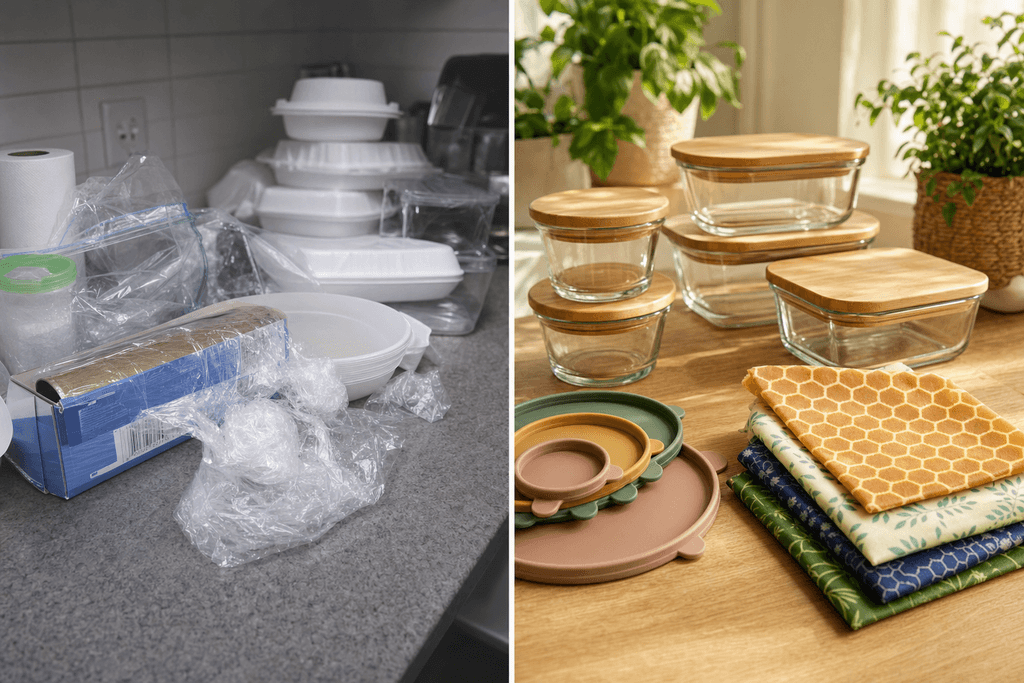
Most people don’t realize that plastic wrap contains harmful chemicals that can transfer directly into your food, especially when heated or used with fatty foods. Every time you cover leftovers with that clingy plastic film, you’re potentially exposing your family to substances you’d rather avoid. The good news is that switching to reusable alternatives is easier than you might think, and the options available today actually work better than traditional plastic wrap. Plus, you’ll save money in the long run while keeping tons of plastic out of landfills.
Swap 1: Ditch Plastic Wrap for Reusable Covers
Beeswax wraps have become popular for good reason. These fabric wraps coated in natural beeswax mold to bowls and food items using just the warmth of your hands. A single beeswax wrap lasts over a year and can replace hundreds of sheets of plastic wrap during its lifetime.
- Silicone stretch lids fit multiple container sizes and create an airtight seal
- Glass containers with proper lids eliminate the need for plastic wrap entirely
- Reusable food bags work for sandwiches, snacks, and produce storage
- Cloth bowl covers with elastic edges keep food fresh without waste
The cost comparison is pretty straightforward. Most families spend around $30-40 per year on plastic wrap and bags. A starter set of reusable alternatives costs about $50-60 but lasts for years. You’ll break even in just 3-4 months, and everything after that is pure savings.
| Option | Initial Cost | Lifespan | Annual Waste |
|---|---|---|---|
| Plastic Wrap | $30-40/year | Single use | 200+ sheets |
| Beeswax Wraps | $20-30 | 1-2 years | Zero |
| Silicone Lids | $15-25 | 5+ years | Zero |
| Glass Containers | $30-50 | 10+ years | Zero |
Swap 2: Replace Plastic Utensils with Natural Materials
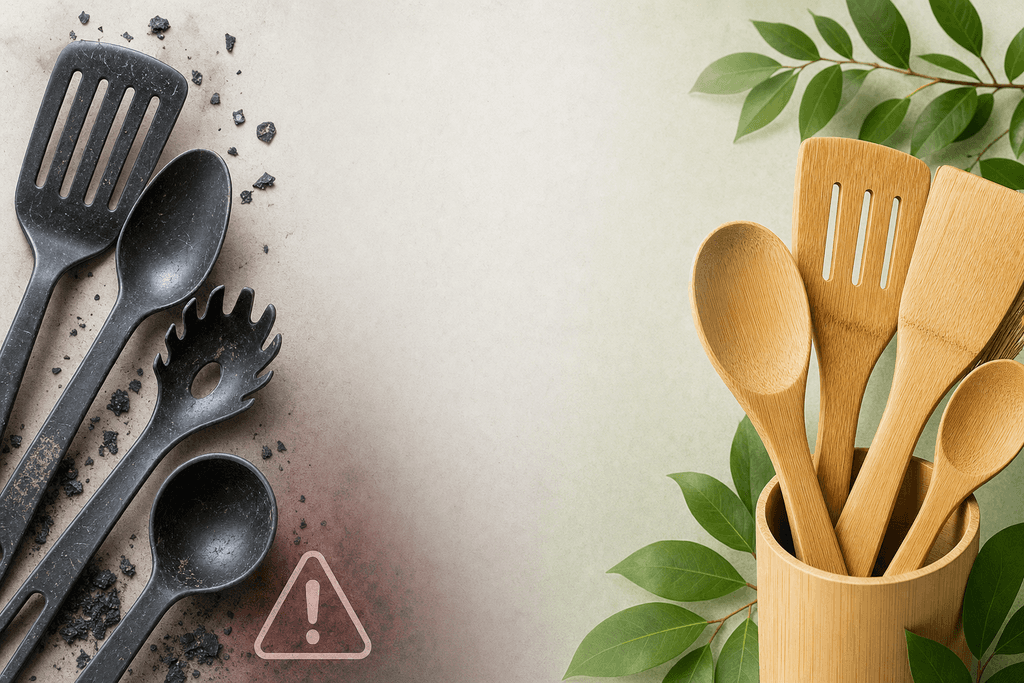
Your plastic spatula might be releasing toxins every time you cook. When plastic utensils get heated during cooking, they can release harmful chemicals into your food without you even knowing it. This happens gradually over time as the plastic degrades from heat exposure and regular use. Switching to natural materials protects your health and actually improves your cooking experience since these alternatives perform better and last much longer.
Swap 2: Replace Plastic Utensils with Natural Materials
Bamboo utensils are naturally antimicrobial, which means they resist bacteria growth without any chemical treatments. They’re also completely biodegradable, so when they eventually wear out after years of use, they won’t sit in a landfill forever. Wooden spoons have been used for centuries because they work so well.
This video walks through practical kitchen swaps that make a real difference in reducing plastic waste at home.
Wooden spoons last decades with proper care and develop a beautiful patina over time. They don’t conduct heat like metal, so you won’t burn your hand while stirring. Natural materials also won’t scratch your cookware the way plastic can, which helps your pots and pans last longer too.
- Bamboo spatulas and spoons handle high heat without melting
- Wooden utensils feel better in your hand during cooking
- Stainless steel tools are dishwasher safe and virtually indestructible
- Natural fiber brushes work great for basting and cleaning
- Metal tongs and turners provide better control than plastic versions
The best approach is to replace plastic utensils gradually as they wear out. Start with the tools you use most often, like spatulas and stirring spoons. Natural materials don’t scratch cookware and actually provide better performance for most cooking tasks.
Swap 3: Choose Sustainable Food Storage Solutions
Plastic containers seem convenient until you notice how they stain, absorb odors, and warp in the dishwasher after just a few months. Those cheap plastic containers you bought last year are probably already looking pretty rough, and they’re leaching chemicals into your food the whole time. Better storage solutions exist that keep food fresher, last for years, and don’t come with health concerns. The switch to eco friendly kitchen storage is one of the easiest ways to reduce plastic in your daily routine.
Glass containers don’t absorb odors or stains like plastic does, which means your tomato sauce container won’t smell like garlic from three meals ago. You can see what’s inside without opening them, and they go from fridge to oven to table without any issues. Stainless steel lunch containers have become popular because they’re lightweight, durable, and keep food fresh without any chemical concerns.
- Silicone bags are freezer-safe and dishwasher-friendly for easy cleaning
- Mason jars work perfectly for dry goods, leftovers, and meal prep
- Stainless steel containers don’t break if dropped
- Glass keeps food fresh longer by creating better seals
- Proper storage reduces food waste significantly
PureHabitat Initiative offers starter kits with essential eco-friendly storage items to help you make the transition without feeling overwhelmed. These kits include the basics you need to get started, chosen specifically for durability and practicality. Proper storage solutions reduce food waste by keeping items fresher for longer periods, which saves you money on groceries.
Start with a few glass containers in different sizes and add to your collection over time. You don’t need to replace everything at once. Focus on the containers you use most frequently first, then gradually phase out the rest as budget allows.
Swap 4: Switch to Plastic-Free Cleaning Tools
Every time you wash dishes with a traditional plastic sponge, tiny pieces of plastic break off and go down your drain. These microplastics end up in waterways and eventually the ocean, where they harm marine life and enter the food chain. Traditional sponges shed microplastics with every use, contributing to pollution you can’t even see. The solution is switching to natural fiber alternatives that clean just as well or better without leaving behind plastic pollution.
Natural fiber brushes and cloths are completely compostable at the end of their life. When they’re worn out, you can toss them in your compost bin instead of sending them to a landfill. Coconut fiber scrubbers tackle tough messes without scratching your pots and pans, and they last much longer than synthetic sponges.
| Tool Type | Plastic Version Lifespan | Natural Version Lifespan | Replacement Frequency |
|---|---|---|---|
| Dish Sponge | 2-4 weeks | 2-3 months | Monthly vs Quarterly |
| Scrub Brush | 3-6 months | 1-2 years | Twice yearly vs Annually |
| Dish Cloth | 1-2 months | 6-12 months | Monthly vs Semi-annually |
Swedish dishcloths have become incredibly popular because they’re so practical. One Swedish dishcloth replaces 17 rolls of paper towels and can be washed in your dishwasher or washing machine hundreds of times. They dry quickly, which prevents bacteria growth and odors.
- Bamboo scrubbers work on non-stick surfaces safely
- Natural bristle brushes handle heavy-duty cleaning
- Cotton dishcloths can be bleached and sanitized
- Natural cleaning tools last longer than plastic versions
- Loofah sponges grow from plants and compost completely
You can find more ideas for reducing plastic in your kitchen at Sustainable Westport’s guide to simple kitchen swaps, which offers additional practical suggestions for everyday changes.
Swap 5: Upgrade to Eco-Friendly Dish Soap and Dispensers
Think about how many plastic dish soap bottles you’ve thrown away in your lifetime. Each one takes hundreds of years to break down, and most people go through several bottles per year. Dish soap bars eliminate plastic bottles completely while cleaning just as effectively as liquid versions. They last longer than you’d expect, with one bar typically replacing 2-3 bottles of liquid soap. The switch is simple and makes a noticeable difference in your household waste.
Refillable glass or ceramic dispensers look better on your counter and last for years. You can buy concentrated soap refills that come in minimal packaging, then dilute them at home. Concentrated formulas reduce shipping emissions because they’re lighter and smaller, which means fewer trucks on the road transporting mostly water.
- Bar soap works in a dish beside your sink
- Refillable dispensers last for years with proper care
- Concentrated formulas save money per wash
- Many eco-friendly options clean better than conventional soaps
- Powder dish soap comes in cardboard boxes
Many people find that eco-friendly dish soaps actually work better than the conventional brands they used before. Natural ingredients cut through grease effectively without harsh chemicals. Switching saves money while reducing waste since concentrated and bar options cost less per use than bottled liquid soap.
For more practical tips on creating an eco friendly kitchen, check out Liz Earle’s guide to reducing plastic, which covers additional swaps you can make throughout your home.
Making these five swaps doesn’t require a complete kitchen overhaul or a huge budget. Start with one or two changes that make sense for your household, then add more as you’re ready. Each small step helps reduce plastic waste while creating a healthier environment for your family. The resources and educational programs from PureHabitat Initiative can guide you through these transitions with practical support tailored to your community’s needs.
Wrap-up
Switching to an eco friendly kitchen doesn’t mean you need to change everything at once. The five swaps we covered, from beeswax wraps to glass containers, silicone bags, bamboo utensils, and reusable produce bags, each make a real difference in how much plastic waste leaves your home. Pick one that feels easiest for you and start there.
Every swap you make helps reduce plastic in landfills and oceans while creating a healthier space for your family. Most plastic items in kitchens contain chemicals that can leak into food, so these changes aren’t just about the environment. They’re about your health too.
The best part is that when you share these habits with friends or neighbors, the impact grows faster than you’d think. PureHabitat Initiative offers resources and educational programs to help families make these transitions without feeling overwhelmed, because sustainable living works better when communities support each other through the process.
You might wonder which swap saves the most plastic or costs the least to start with. Maybe you’re curious about how long these alternatives actually last compared to their plastic versions. Those are the kinds of questions that help you make choices that stick, and we’ve got answers that might surprise you.
Common Questions About Eco Friendly Kitchen Swaps
Making the switch to an eco friendly kitchen can feel overwhelming at first, especially when you’re not sure what to expect. People often wonder about the cost, durability, and whether these changes actually matter in the long run. These are all fair questions that deserve honest answers, and understanding the practical side of reducing plastic in your kitchen makes the transition much easier.
Are eco friendly alternatives more expensive upfront?
Yes, many eco friendly kitchen products cost more initially than their plastic counterparts. A set of beeswax wraps might run you $20 while plastic wrap costs $3, but the reusable option lasts for a year or more with proper care. The upfront investment pays off over time because you’re not constantly replacing disposable items.
How do I clean and maintain natural kitchen items?
Most natural kitchen items are surprisingly easy to maintain with simple care routines. Bamboo utensils and cutting boards need occasional oiling with food-safe mineral oil to prevent cracking, while beeswax wraps just need a quick rinse with cool water and mild soap. Stainless steel containers can go right in the dishwasher, and natural fiber brushes dry quickly when stored bristle-side down.
Where can I buy these eco friendly products?
You can find eco friendly kitchen products at local health food stores, farmers markets, and online retailers that specialize in sustainable goods. PureHabitat Initiative also connects communities with resources for sustainable living, including guidance on where to source quality eco-friendly products in your area. Many mainstream stores now carry basic options like reusable produce bags and stainless steel straws too.
Will these swaps really make a difference?
Every swap you make keeps plastic out of landfills and oceans, and the impact adds up faster than you’d think. A single person switching to reusable produce bags prevents roughly 500 plastic bags from entering the waste stream each year. When entire communities adopt these practices through programs focused on resource sharing and environmental education, the collective impact becomes substantial.
How long do eco friendly kitchen items last?
Quality eco friendly kitchen items often outlast their plastic equivalents by years. Stainless steel containers can last decades, bamboo utensils typically last 5-10 years, and silicone baking mats can handle thousands of uses. The durability means less waste overall and fewer trips to the store for replacements.
Can I recycle my old plastic kitchen items?
Some plastic kitchen items can be recycled depending on your local recycling program and the type of plastic. Check the recycling number on the bottom and verify what your municipality accepts, as many programs only take certain plastics. Consider donating usable plastic items to thrift stores or community organizations rather than tossing them, which extends their life and keeps them out of landfills a bit longer.