Table of Contents
Why Bathroom Plastic Matters More Than You Think
The average bathroom contains over 50 plastic items, from shampoo bottles to toothbrushes, and most people never think twice about it. But here’s something that might surprise you: bathrooms are responsible for roughly 30% of all household plastic waste. That’s nearly a third of the plastic your family throws away, and most of it comes from a single room in your house. The problem gets worse when you realize that the majority of these plastics never actually get recycled, even when you toss them in the blue bin.

When we talk about a sustainable bathroom, we’re not just talking about saving the planet in some abstract way. The plastics in your bathroom create real problems that affect your health and your local environment. Every time you squeeze that plastic bottle or rinse off that body wash, tiny plastic particles called microplastics wash down your drain and into water systems. These particles are so small that water treatment plants can’t filter them out completely.
The Hidden Cost of Bathroom Plastics
Most bathroom plastics fall into categories that recycling centers struggle to process. The humid environment of bathrooms also creates another issue that doesn’t get talked about enough. When plastic sits in warm, moist conditions, it can release chemicals faster than it would in other parts of your home.
| Plastic Source | Annual Waste | Recycling Rate |
|---|---|---|
| Shampoo bottles | 552 million pounds | Less than 9% |
| Toothbrushes | 1 billion units | Nearly 0% |
| Razors | 2 billion units | Nearly 0% |
| Soap dispensers | 300 million units | Less than 5% |
The numbers tell a story that’s hard to ignore. Organizations like PureHabitat Initiative work with communities to address these exact issues through education and resource sharing, helping families understand how to reduce plastic in practical ways. According to research on bathroom plastic pollution, simple swaps can cut your bathroom plastic waste by up to 80%.
Why Recycling Fails in the Bathroom
You might think you’re doing the right thing by recycling those empty bottles, but the reality is more complicated. Here’s why bathroom plastics rarely make it through the recycling process:
- Small plastic items like caps and pumps fall through sorting machines at recycling facilities
- Mixed materials like razors with metal and plastic components can’t be separated easily
- Product residue left in bottles contaminates recycling batches
- Colored or black plastics are harder for sorting equipment to identify
The recycling symbol on the bottom of your shampoo bottle doesn’t guarantee it will actually be recycled. In fact, studies show that less than 9% of all plastic ever produced has been recycled. The rest sits in landfills or ends up in oceans and waterways.
Microplastics and Your Water Supply
Every time you use certain personal care products, you’re potentially sending thousands of microplastic particles down the drain. These tiny pieces come from several sources in your bathroom:
- Exfoliating scrubs with plastic microbeads
- Synthetic fibers from washcloths and loofahs
- Degrading plastic bottles that shed particles over time
- Toothpaste with plastic ingredients
These microplastics don’t disappear. They flow through your pipes into treatment plants, and many pass right through into rivers, lakes, and oceans. Scientists have found microplastics in drinking water, seafood, and even in human blood samples. The long-term health effects are still being studied, but early research suggests these particles can carry harmful chemicals into our bodies.
The good news is that switching to a sustainable bathroom setup doesn’t require a complete overhaul overnight. Small changes add up quickly when you consider how many times you use bathroom products each day. The fixes we’ll cover next are simple swaps that anyone can make, regardless of budget or living situation.
Fixes 1-2: Rethink Your Shower Essentials
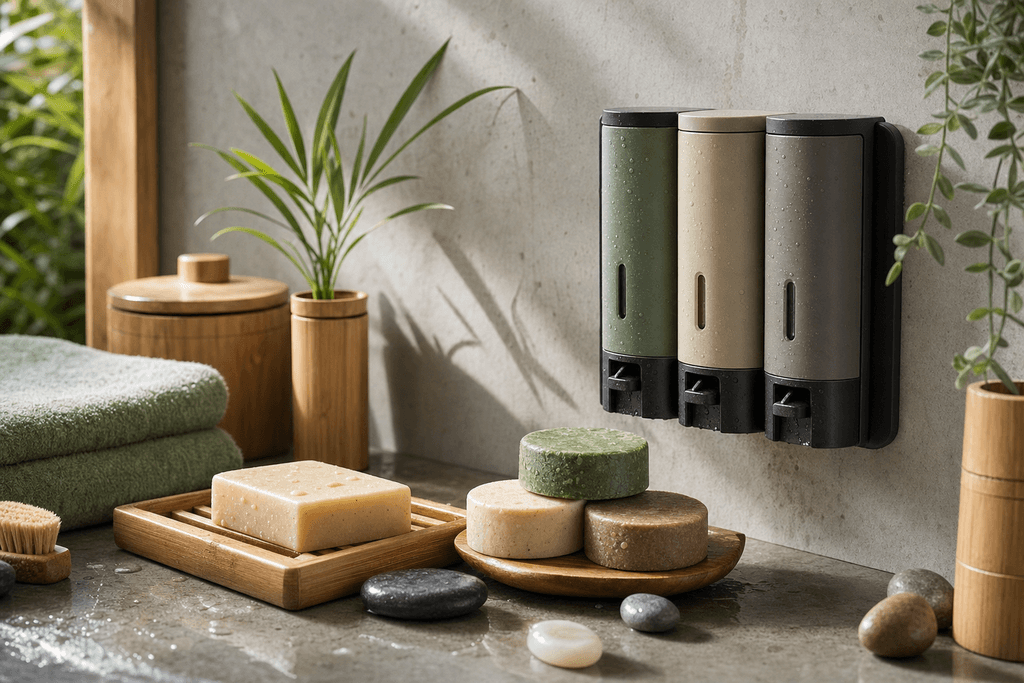
The average person tosses out between six and eight plastic bottles every year just from shower products alone. That’s a lot of waste sitting in landfills for the next 450 years. Switching to bar soap and shampoo bars is one of the easiest ways to cut down on bathroom plastic, and honestly, it’s cheaper too. Quality bars last way longer than their bottled cousins because you’re not paying for water weight.
Most people worry that bar shampoo won’t work for their hair type, but that’s old thinking. Modern shampoo bars come in formulas for oily, dry, curly, and color-treated hair. The trick is reading the ingredients just like you would with bottled shampoo.
| Product Type | Annual Cost | Lifespan | Plastic Waste |
|---|---|---|---|
| Plastic Bottles | $120-180 | 2-3 months each | 6-8 bottles |
| Bar Alternatives | $60-90 | 3-4 months each | Zero bottles |
For families who prefer pumps, refillable wall-mounted dispensers work great. You buy soap or shampoo in bulk containers (usually recyclable) and refill your dispensers. This cuts down on clutter and makes shower time easier for kids who drop bottles constantly.
- Choose bars with natural oils for dry hair
- Look for clarifying formulas if you have oily scalp
- Store bars on a draining dish so they dry between uses
- Install dispensers at different heights for kids and adults
The PureHabitat Initiative includes guidance on selecting the right sustainable bathroom products in our resource sharing programs. We’ve seen families cut their plastic waste by more than half just by making these two simple swaps.
Fixes 3-4: Upgrade Your Bathroom Tools
Americans throw away over one billion plastic toothbrushes every single year. That’s enough to circle the Earth four times if you lined them up end to end. The weird part is that bamboo toothbrushes work exactly the same way, cost about the same, and break down naturally instead of sitting in a landfill forever. The handle is biodegradable, though you’ll need to pull out the nylon bristles before composting.
This video shows some practical swaps you can make in your bathroom to reduce plastic without making your life harder. The tools you use every day matter more than you think.
Reusable cotton rounds are another game changer. Each person uses around 1,500 disposable cotton pads per year for makeup removal and face washing. Reusable rounds last for years and just need a quick wash with your regular laundry. Most come in sets of 10 to 20, which is plenty to rotate through between wash days.
| Item | Disposable Version | Reusable Version |
|---|---|---|
| Toothbrush | Lasts 3 months, plastic | Lasts 3 months, biodegradable |
| Cotton Rounds | Single use, 1,500/year | Multi-year use, 10-20 total |
| Annual Cost | $45-60 | $25-35 |
Washing reusable rounds is simple. Toss them in a mesh laundry bag with your towels and wash on warm. They air dry fast, usually within a few hours. PureHabitat Initiative offers starter kits with bamboo toothbrushes and reusable cotton rounds to help communities get started with these basics.
- Replace toothbrushes every three months like normal
- Keep reusable rounds in a small basket near your sink
- Use a mesh bag so rounds don’t get lost in the wash
- Buy a few extra rounds if multiple people share a bathroom
Fixes 5-7: Transform Your Bathroom Storage and Cleaning
Plastic containers in your bathroom aren’t just waste problems. They can leach chemicals into your products, especially when they sit in warm, humid air for months. Glass and metal containers look better, last decades instead of years, and keep your cotton swabs and bath salts actually safe. The upfront cost is higher, but you’re basically buying storage for life instead of replacing cracked plastic every couple years.
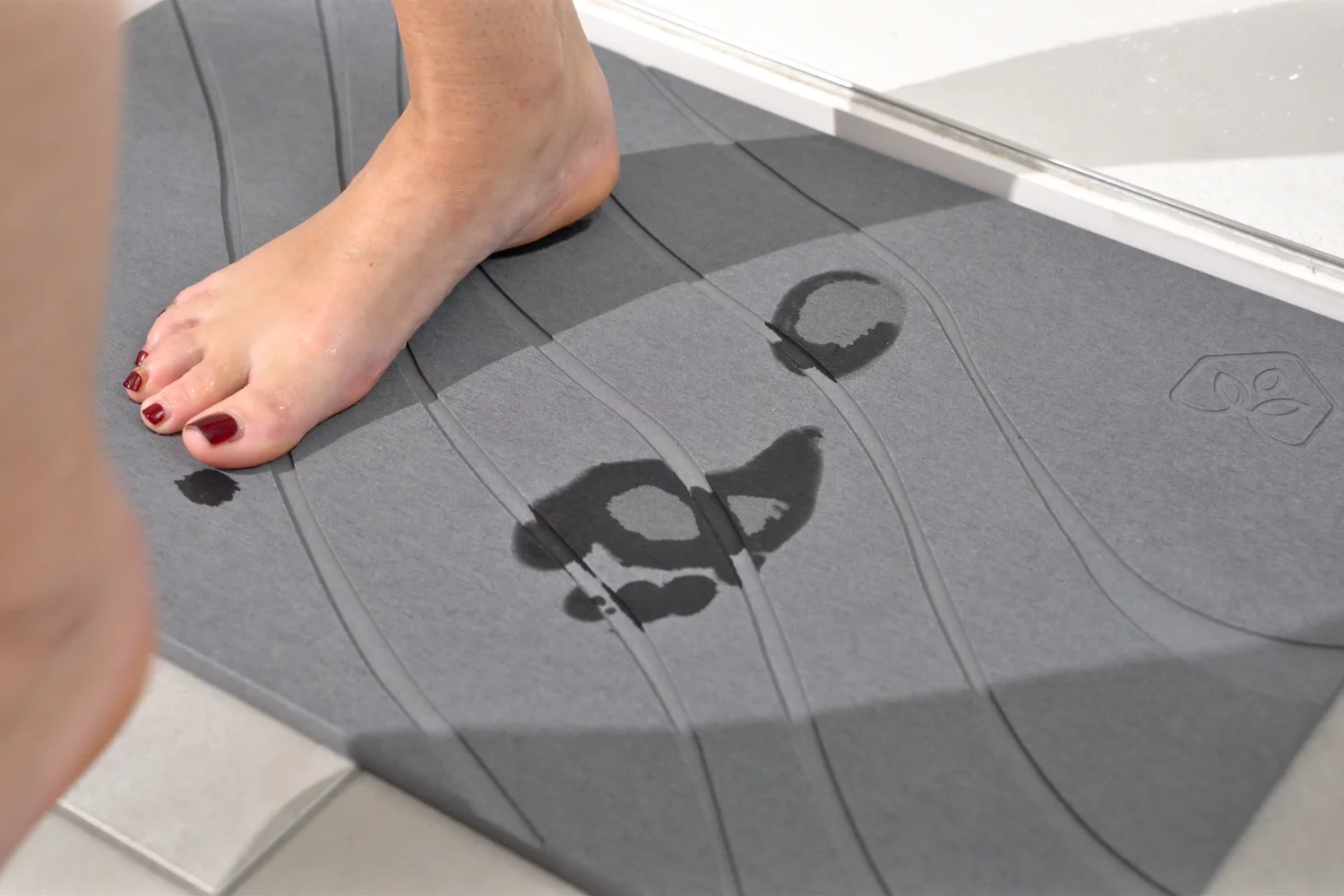
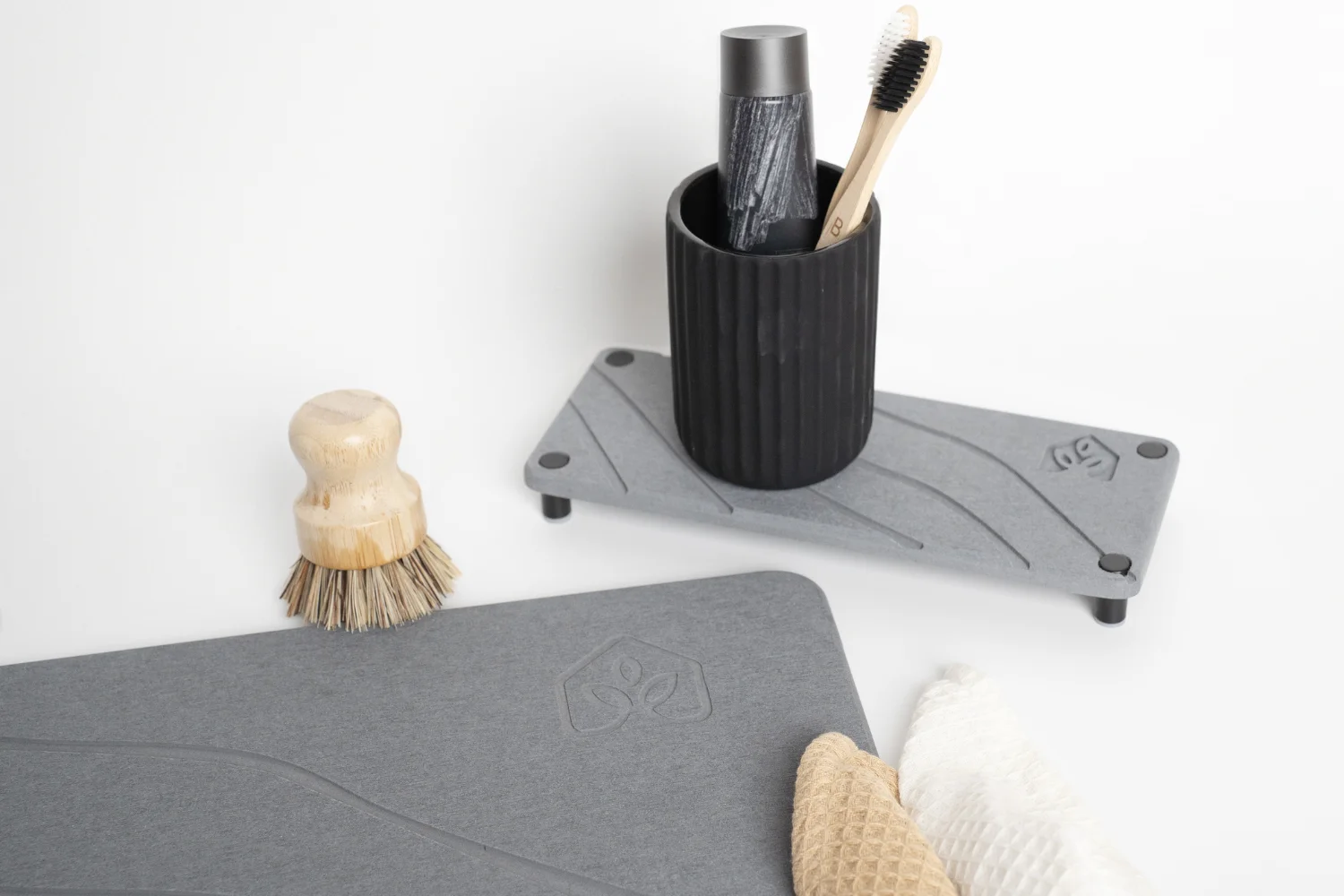
Diatomite bath mats are one of those things that sound too good to be true until you try one. They’re made from fossilized algae that naturally absorbs water and dries in minutes. No more gross, mildewy fabric mats that need constant washing. The material is naturally antimicrobial, so bacteria doesn’t grow on it like traditional mats.
- Glass jars work great for cotton products and bath salts
- Metal tins are perfect for bar soaps and shampoo bars
- Diatomite mats dry almost instantly after you step off
- These mats last for years with basic care
DIY cleaning solutions are easier than most people think. You probably already have the ingredients sitting in your kitchen. Vinegar and baking soda handle most bathroom cleaning jobs without the plastic spray bottles or harsh chemicals. Mix them in reusable glass spray bottles and you’re set.
Three Simple Cleaning Recipes
- All-Purpose Spray: Mix equal parts water and white vinegar, add 10 drops of tea tree oil
- Scrubbing Paste: Combine baking soda with just enough water to make a paste
- Mirror Cleaner: One part vinegar to four parts water in a spray bottle
The science behind diatomite is pretty cool. The fossilized algae creates millions of tiny pores that pull moisture away from your feet through capillary action. It’s the same principle that makes paper towels absorbent, but way more effective. You can find more tips on making your bathroom plastic-free at this helpful resource.
Fixes 1-2: Rethink Your Shower Essentials
Action Checklist
- Replace plastic storage with glass jars this month
- Order a diatomite mat to replace fabric versions
- Make one DIY cleaner to test before buying more supplies
- Label glass containers so everyone knows what’s inside
- Clean diatomite mat monthly with light sandpaper
These seven fixes work together to cut bathroom plastic by 80% or more. The PureHabitat Initiative helps communities implement these changes through our educational programs and resource sharing. We’ve watched neighborhoods go from filling trash bags with plastic bottles to barely producing any bathroom waste at all. It takes a few weeks to adjust your habits, but the money you save and the waste you avoid makes it worth the effort.

Fixes 3-4: Upgrade Your Bathroom Tools
Your Plastic-Free Bathroom Journey Starts Now
These seven fixes might seem small on their own, but together they can cut out about 80% of the plastic waste coming from your bathroom. That’s a pretty big deal when you think about how much plastic the average person tosses every year. The best part is you don’t need to change everything at once to make a real difference.
Starting with just one or two swaps is enough to get the ball rolling. Maybe you switch to bar soap this week and add a bamboo toothbrush next month. The changes add up faster than you’d think.
Here’s what makes the biggest impact when you’re working toward a sustainable bathroom:
- Switching from bottled products to bars or refillables
- Replacing single-use items with reusable options
- Choosing products with minimal or no packaging
- Supporting companies that prioritize eco-friendly materials
The thing about trying to reduce plastic is that it’s easier when you’re not doing it alone. PureHabitat Initiative offers educational resources and community support to help you figure out which changes work best for your situation. Sometimes you just need someone to point you in the right direction or answer a question about whether something is actually better for the environment.
You might be wondering about specific products or how to handle certain situations in your own bathroom. That’s where having access to solid information really matters.
Common Questions About Sustainable Bathrooms
Making the switch to a sustainable bathroom brings up a lot of practical questions. Most people want to know if these changes will actually work for their daily routine, and whether the effort is worth it. The good news is that thousands of families have already made these switches successfully, and the answers to common concerns are pretty straightforward. Here’s what you need to know before you start your plastic-free bathroom journey.
Are sustainable alternatives more expensive upfront?
Some sustainable bathroom products do cost more initially, but they usually last much longer than their plastic counterparts. A bamboo toothbrush might be a dollar or two more than a plastic one, but bar shampoos can last two to three times longer than bottled versions. When you calculate cost per use, most people actually save money over time.
Do bar soaps and shampoos work as well as liquid versions?
Bar versions work just as well as liquids, though there’s usually a short adjustment period of about a week or two. Your hair might feel different at first because bar shampoos don’t contain the silicones that coat your hair in bottled products. Once your hair adjusts, most people report healthier hair and scalp conditions than they had before.
How do I convince my family to make these changes?
Start small and lead by example rather than forcing changes on everyone at once. Try switching one or two items first, like replacing plastic toothbrushes or trying refillable soap dispensers. When family members see that sustainable options work just as well without any extra hassle, they’re usually willing to try more changes. PureHabitat Initiative offers educational resources that can help explain the environmental impact to kids and adults in ways that make sense.
What should I do with my existing plastic items?
Don’t throw away perfectly good items just to reduce plastic immediately. Use what you have until it runs out or breaks, then replace it with a sustainable alternative. This approach is actually better for the environment than creating more waste. You can also repurpose plastic containers for storage in other areas of your home.
Where can I buy these sustainable alternatives?
Most sustainable bathroom products are now available at regular grocery stores, pharmacies, and online retailers. Local zero-waste shops and farmers markets often carry refill stations for soaps and cleaning products. Organizations like PureHabitat Initiative also connect communities with resources and suppliers that specialize in eco-friendly products.
How long does it take to see real impact?
You’ll notice less trash in your bathroom within the first month of making switches. The average person uses about 11 plastic bottles just for bathroom products each year, so even small changes add up quickly. On a larger scale, when communities work together through programs focused on resource sharing and environmental education, the collective impact becomes visible in local waste reduction within just a few months.