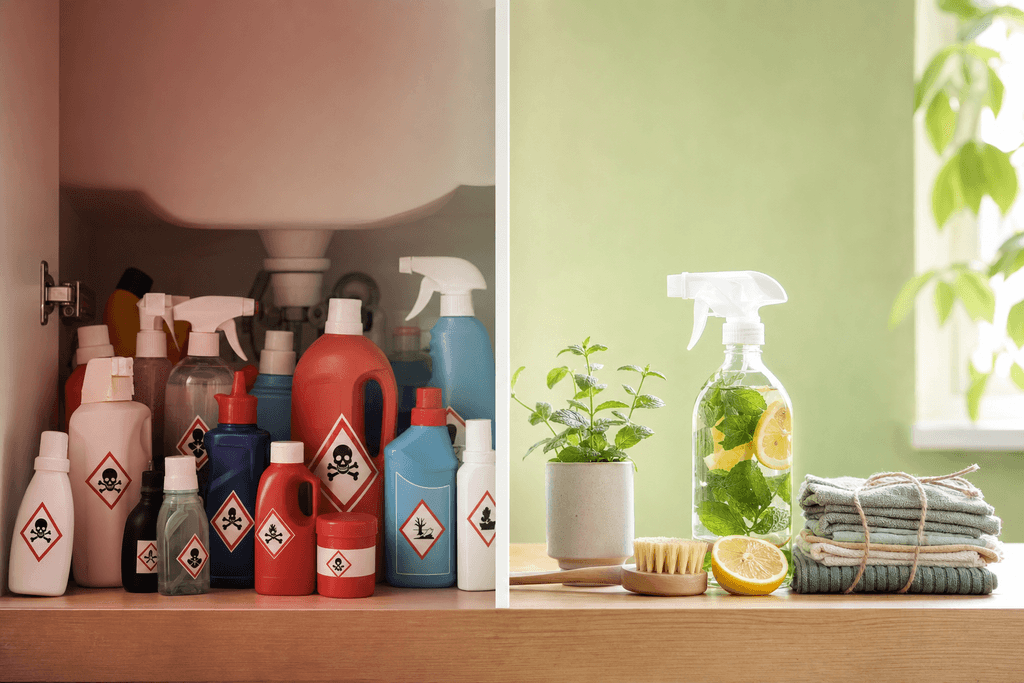
Every time you spray that bright blue bathroom cleaner, you’re releasing a cocktail of chemicals into the air you breathe, and in a small apartment bathroom, those fumes have nowhere to go. Switching to non toxic cleaning methods isn’t just better for the planet—it protects your family, your pets, and your lungs from harsh ingredients that linger long after you’ve finished scrubbing. The good news is that creating an eco friendly bathroom is simpler and more affordable than you might think, and the results are just as sparkling clean.
Table of Contents
- The Hidden Dangers Lurking in Conventional Cleaners
- Essential Non Toxic Ingredients for Bathroom Cleaning
- DIY Non Toxic Cleaning Recipes That Actually Work
- Best Eco Friendly Bathroom Products for Apartment Living
- Room by Room Non Toxic Cleaning Strategy
- Making the Switch to Non Toxic Bathroom Cleaning
- Common Questions About Non Toxic Bathroom Cleaning
Essential Non Toxic Ingredients for Bathroom Cleaning
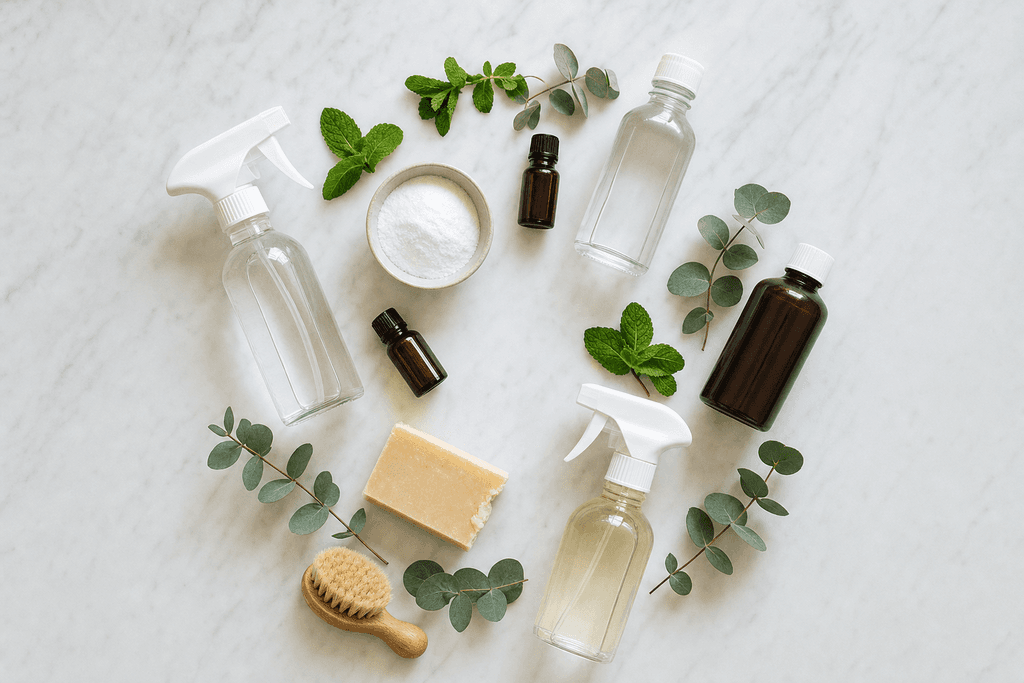
Most bathroom cleaners contain chemicals that can irritate your lungs, skin, and eyes, but you probably already have safer alternatives sitting in your kitchen right now. The shift to non toxic cleaning doesn’t require fancy products or a big budget. In fact, five simple ingredients can handle almost every bathroom cleaning task you’ll face in your apartment. These basics work just as well as conventional cleaners, and they won’t leave behind harsh fumes that linger in small spaces. Understanding what each ingredient does helps you mix the right solution for each job.
Essential Non Toxic Ingredients for Bathroom Cleaning
White vinegar cuts through soap scum and mineral deposits because of its natural acidity. It’s perfect for showerheads, faucets, and glass surfaces where hard water leaves those stubborn white marks.
| Ingredient | Primary Use | Cost Range |
|---|---|---|
| White Vinegar | Soap scum, mineral deposits | $2-4 per gallon |
| Baking Soda | Scrubbing, deodorizing | $1-3 per box |
| Castile Soap | General cleaning | $10-15 per bottle |
| Hydrogen Peroxide | Disinfecting surfaces | $1-2 per bottle |
| Essential Oils | Fragrance, antibacterial | $5-10 per bottle |
Baking soda works as a gentle scrubbing agent that won’t scratch surfaces, and it naturally absorbs odors instead of just covering them up. Castile soap provides the cleaning power you need without synthetic fragrances or harsh detergents. You can find all these ingredients at regular grocery stores, dollar stores, or bulk retailers where prices stay friendly to apartment budgets.
Hydrogen peroxide disinfects without the toxic fumes of bleach, making it safer for bathrooms with poor ventilation. Essential oils like tea tree, lavender, or lemon add natural fragrance while providing antibacterial properties. The EPA offers guidance on identifying greener cleaning products if you want to learn more about what makes cleaning ingredients safer for your home.
DIY Non Toxic Cleaning Recipes That Actually Work
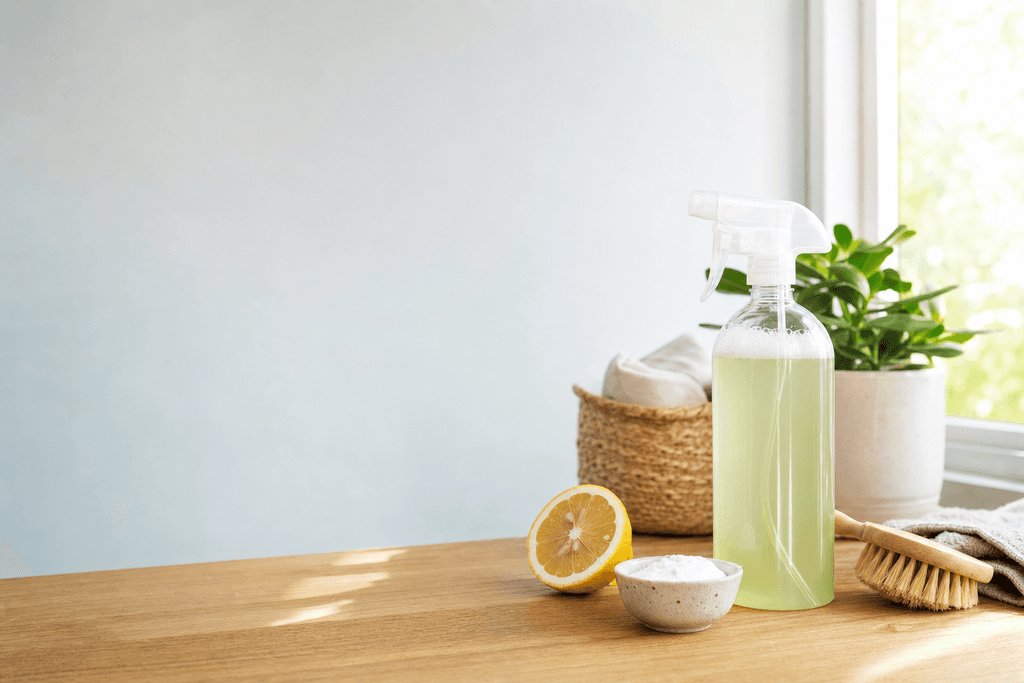
Making your own cleaners sounds complicated, but most recipes only need two or three ingredients mixed together in a spray bottle. These formulas work in real apartments with real messes, not just in theory. The best part is you can make a week’s worth of cleaner in about five minutes, and you’ll know exactly what’s in every bottle. Small batch mixing also means you won’t need much storage space, which matters when you’re working with a tiny bathroom cabinet.
DIY Non Toxic Cleaning Recipes That Actually Work
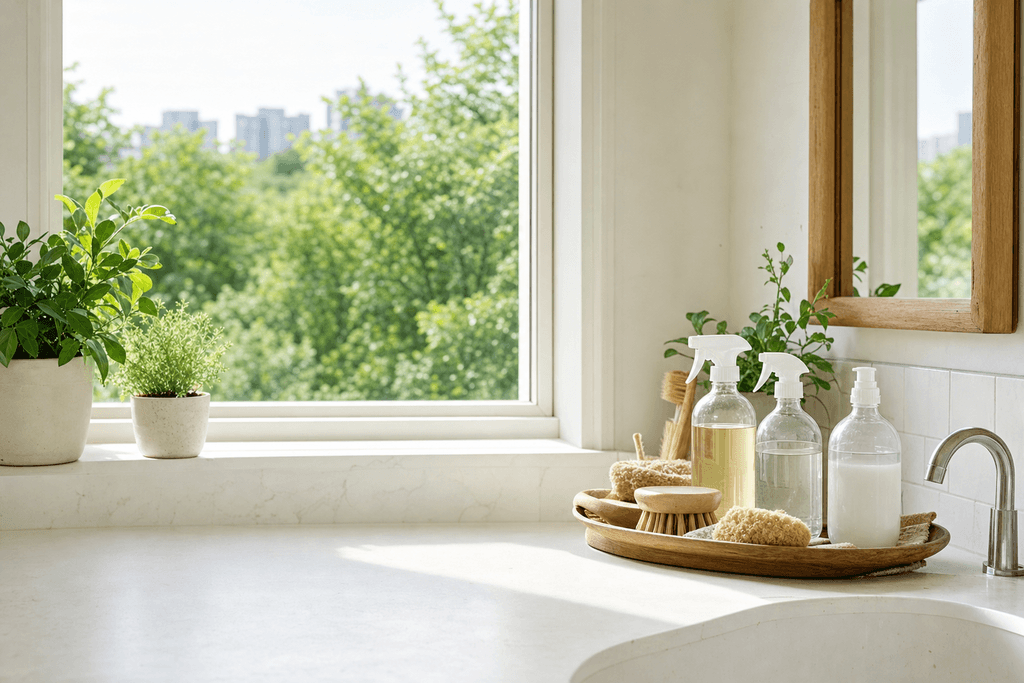
For an all-purpose bathroom spray, combine 1 cup water, 1 cup white vinegar, and 10 drops of your favorite essential oil in a spray bottle. This handles daily cleaning on most surfaces including counters, sinks, and exterior toilet surfaces.
- Toilet bowl cleaner: Pour 1 cup baking soda and 1 cup vinegar into the bowl, let sit 15 minutes, scrub and flush
- Shower scrub: Mix 1/2 cup baking soda with enough castile soap to form a paste, apply with a damp cloth
- Mirror cleaner: Combine 1 cup water with 1 tablespoon vinegar in a spray bottle for streak-free glass
- Drain maintenance: Pour 1/2 cup baking soda followed by 1 cup hot vinegar down drains weekly
Store your homemade cleaners in labeled spray bottles under the sink or in a small caddy. Dark glass bottles work best for recipes with essential oils since light can break down their properties over time. Most recipes stay good for about a month, though the vinegar-based ones last even longer.
Best Eco Friendly Bathroom Products for Apartment Living
Sometimes you need the convenience of ready-made products, and choosing the right ones makes your eco friendly bathroom routine easier to maintain. Not all green products work equally well, and some cost way more than they should. The trick is knowing which brands deliver actual results and which ones just have nice packaging. PureHabitat Initiative offers sustainable bathroom accessories that support your green cleaning habits without taking up extra space or breaking your budget. When you’re renting, you want products that work now but won’t leave you with a bunch of stuff you can’t use when you move.
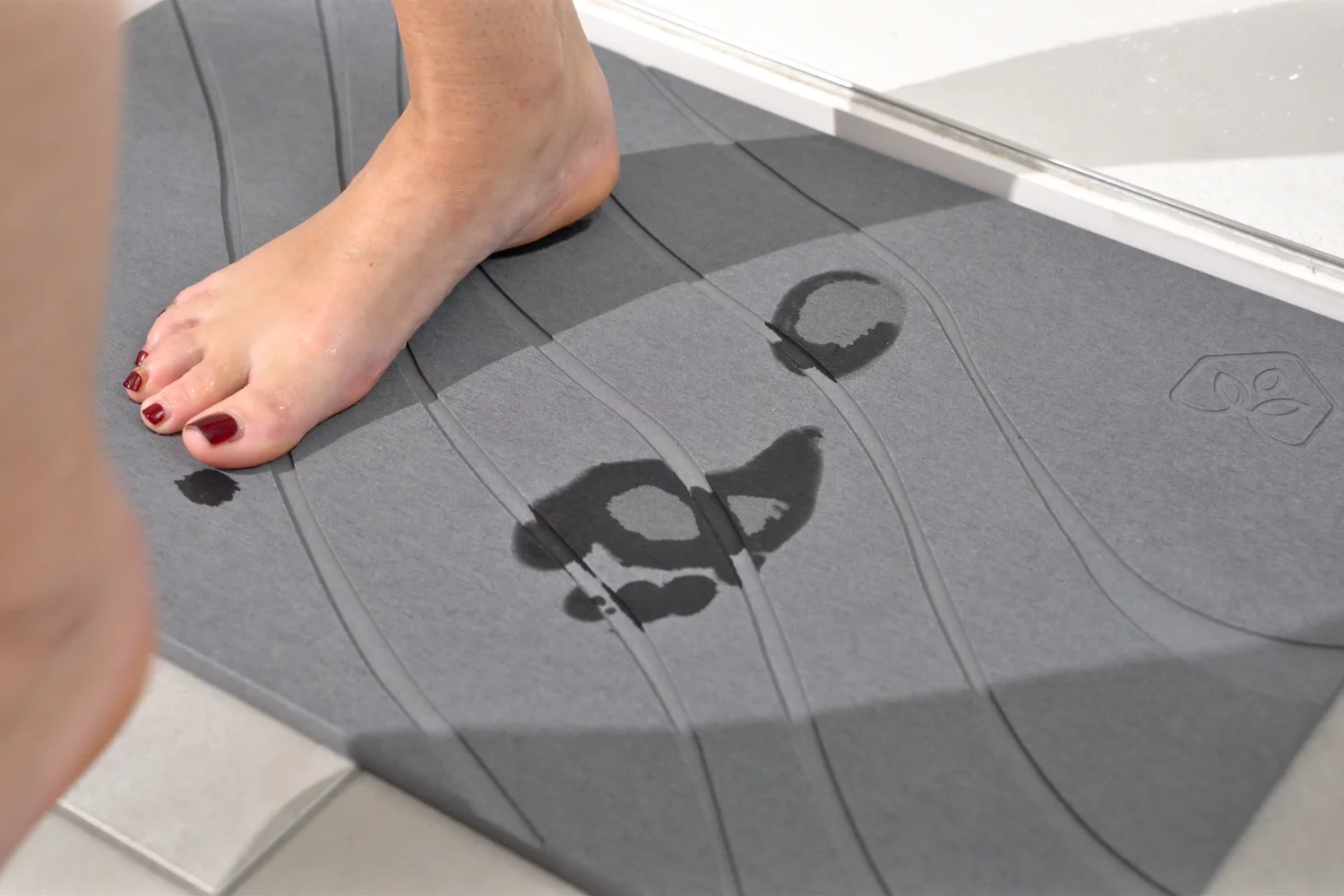
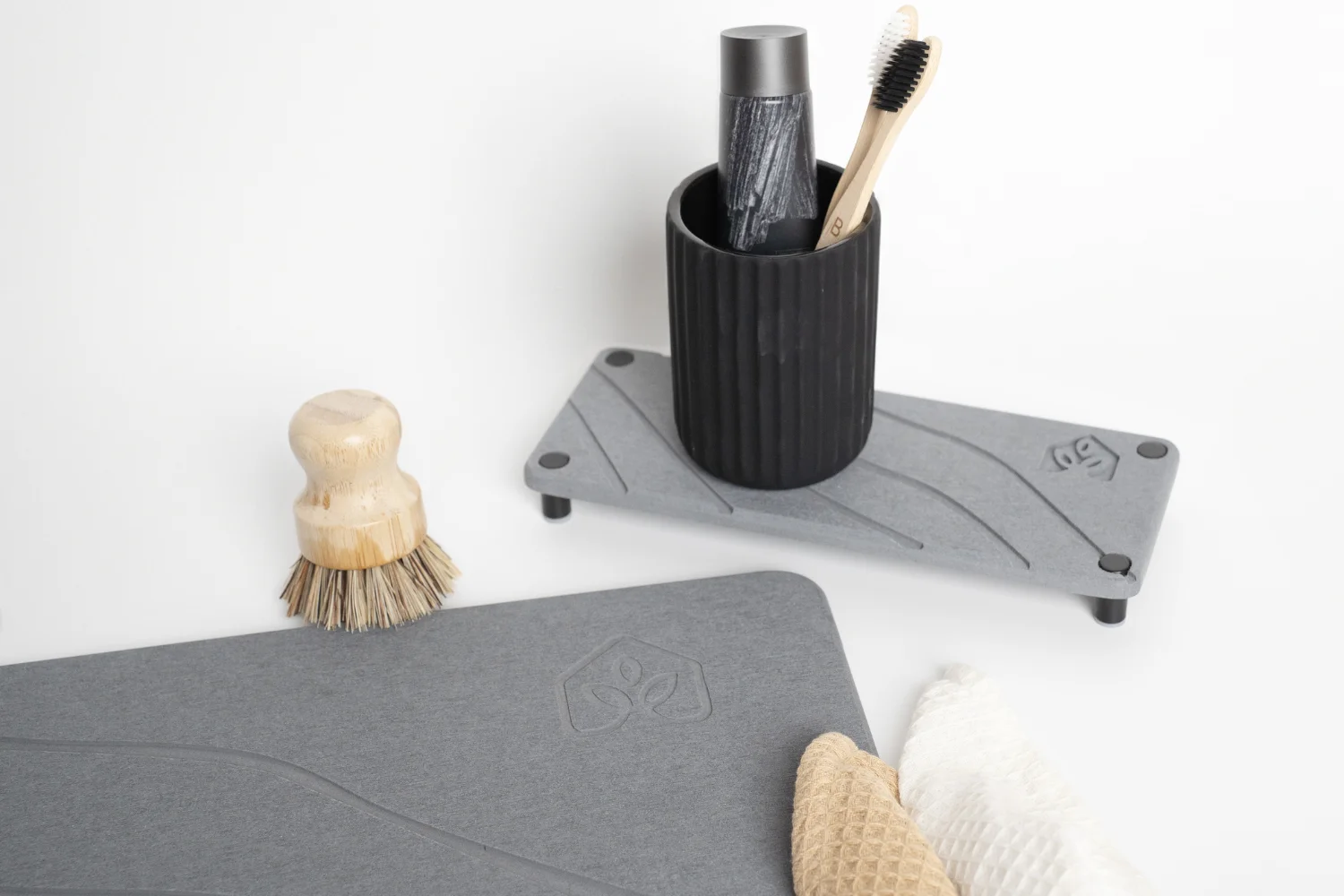
Microfiber cloths clean better than paper towels and last for years with proper care. Look for brands that specify they’re made from recycled materials. Natural bristle scrub brushes with wooden handles replace plastic versions and actually work better on grout and tile.
- Check labels for certifications like EPA Safer Choice or Green Seal
- Avoid products with “fragrance” listed as an ingredient (it often hides chemicals)
- Choose concentrated formulas that you dilute yourself to reduce packaging waste
- Look for refillable options at local zero-waste stores
- Buy multi-purpose cleaners instead of separate products for every surface
For renters on a budget, start with just one or two quality products and build your collection over time. A good all-purpose cleaner and a toilet bowl cleaner cover most needs. You can learn more about green cleaning effectiveness and best practices to make informed choices about which products actually work.
Room by Room Non Toxic Cleaning Strategy
Breaking down your bathroom into zones makes cleaning less overwhelming and helps you remember which products work best where. Different surfaces need different approaches, but the same basic ingredients handle everything. Most apartment bathrooms share similar challenges like limited ventilation, small spaces that get humid fast, and surfaces that show water spots easily. A solid strategy means you’re not wasting time or products on methods that don’t match your specific setup.
Start with the toilet by spraying your all-purpose cleaner on the outside surfaces and letting your baking soda mixture sit in the bowl while you clean other areas. This gives the natural ingredients time to work without you standing there waiting.
- Shower and tub: Spray vinegar solution after each use to prevent mildew buildup in humid conditions
- Sink and counters: Use all-purpose spray daily, baking soda paste weekly for stubborn stains
- Floors: Mop with diluted castile soap, focusing on corners where dust collects
- Mirrors: Clean with vinegar solution and microfiber cloth for no streaks
Ventilation matters more than people think, especially in apartments where bathroom fans might be weak or nonexistent. Open the door and any windows while cleaning, and leave them open for 20 minutes after to let moisture escape. This prevents mold growth better than any cleaner can.
Weekly tasks include scrubbing the toilet, wiping down all surfaces, and mopping the floor. Monthly deep cleaning means tackling grout lines, cleaning the exhaust fan cover, and washing bath mats and shower curtains. This rhythm keeps your bathroom clean without requiring hours of work every week.
Making the Switch to Non Toxic Bathroom Cleaning
Switching to non toxic cleaning in your bathroom does more than just protect your family from harsh chemicals. It keeps those same chemicals out of our water systems and reduces the plastic waste that comes with buying endless bottles of conventional cleaners. Your lungs will thank you too, since you won’t be breathing in all those fumes that make you cough and give you headaches. The best part is that most of these changes actually save you money over time.
You don’t need to throw out everything under your sink tomorrow. Start with just one or two swaps, like replacing your all-purpose cleaner with a simple vinegar solution or switching to baking soda for scrubbing. Once you see how well these basic ingredients work, you’ll probably wonder why you ever paid so much for the fancy stuff.
The long-term savings really add up when you consider:
- A box of baking soda costs less than two dollars and lasts for months
- One gallon of white vinegar replaces multiple spray bottles of cleaner
- Castile soap can handle everything from counters to floors
Making these changes on your own is great, but having support makes it easier. The PureHabitat Initiative helps communities learn about eco friendly bathroom practices through workshops and resource sharing that make sustainable living feel less overwhelming. Sometimes you just need someone to show you that mixing vinegar and baking soda really does work as well as the blue stuff in the plastic bottle.
The questions people ask about non toxic cleaning usually cover the same ground, so let’s tackle those next.
Common Questions About Non Toxic Bathroom Cleaning
Switching to eco friendly bathroom cleaning can feel like a big change, especially when you’re used to conventional products that promise instant results. Most people have the same worries about whether natural methods actually work, how much they’ll cost, and if they can handle real bathroom problems. These questions come up all the time, and they’re worth answering honestly because making the switch shouldn’t feel like guesswork.
Do natural cleaners actually kill germs and bacteria?
Yes, many natural ingredients have proven antimicrobial properties that kill germs effectively. Vinegar, for example, can eliminate about 90% of bacteria and 80% of viruses, while hydrogen peroxide is even stronger against pathogens. Tea tree oil and thyme oil are also powerful natural disinfectants that work well in bathroom settings. The key is giving them enough contact time on surfaces, usually around 5-10 minutes, rather than wiping immediately like you might with chemical cleaners.
How much does it cost to switch to non toxic cleaning?
The upfront cost is surprisingly low, often under $20 for basic supplies like vinegar, baking soda, castile soap, and essential oils. These ingredients go much further than conventional cleaners because you’re making concentrated solutions that you dilute as needed. Most people find they spend less money over time since a single bottle of vinegar costs a few dollars and can replace multiple specialized bathroom cleaners.
Can I use these methods if I have hard water in my apartment?
Hard water actually makes non toxic cleaning more important because mineral buildup responds better to acidic cleaners like vinegar than harsh chemicals. The acidity breaks down calcium and lime deposits naturally without damaging fixtures. For stubborn hard water stains, you can make a paste with baking soda and vinegar, let it sit for 15 minutes, then scrub gently.
What about tough stains and mildew in older bathrooms?
Older bathrooms need a bit more patience but respond well to natural cleaning methods with consistent use. For mildew, hydrogen peroxide or tea tree oil solutions work effectively when sprayed on affected areas and left for at least 10 minutes. Tough stains often require repeated applications rather than one aggressive scrub, but the results are just as good without the toxic fumes. PureHabitat Initiative provides educational resources on tackling specific challenges in older homes through our community programs.
Are DIY cleaners safe for septic systems?
Natural cleaners are actually much better for septic systems than conventional products. Vinegar, baking soda, and castile soap break down easily and don’t kill the beneficial bacteria your septic system needs to function properly. Chemical cleaners can disrupt the bacterial balance and cause expensive septic problems down the road.
How do I store homemade cleaners safely in a small space?
Most homemade cleaners can be stored in small spray bottles under your sink or in a bathroom cabinet, taking up less space than multiple commercial products. Label everything clearly with the contents and date made, and keep them away from direct sunlight. Vinegar-based cleaners last several months, while solutions with castile soap should be used within a few weeks for best results.