The average household tosses out 4.5 pounds of waste every single day, and most families don’t realize how much their daily routines quietly drain both the planet and their wallets. The good news is that building an eco friendly home doesn’t require a complete lifestyle overhaul or expensive renovations. When families work together on small, consistent changes, those habits stick around for the long haul and create a ripple effect that matters way more than any one-time grand gesture ever could.
Table of Contents
The Real Cost of Everyday Home Habits
The average American family throws away about 25% of the food and drinks they buy, which adds up to roughly $1,500 per year just in wasted groceries. But food isn’t the only thing going to waste in our homes. From leaving lights on in empty rooms to running half-empty dishwashers, most families don’t realize how much money slips through their fingers each month. These everyday habits don’t just hurt your wallet. They also leave a much bigger mark on the planet than most people think.
Where Your Money Really Goes
Most families spend way more than they need to on basic utilities and household items. The typical home wastes about 30% of the energy it uses, which means you’re basically paying for nothing. Water waste is just as bad, with leaky faucets and long showers adding hundreds of dollars to annual bills.
Here’s what the numbers actually look like for an average family home:
| Resource | Annual Waste | Cost Impact |
|---|---|---|
| Electricity | 30% of usage | $400-600/year |
| Water | 9,400 gallons | $200-350/year |
| Food | 25% of purchases | $1,500/year |
| Heating/Cooling | 20-30% of energy | $300-500/year |
| Disposable Products | Varies by family | $250-400/year |
The Environmental Side of Things
Your home’s carbon footprint is probably bigger than you’d guess. The average family home produces about 48 pounds of carbon dioxide every single day. That’s like driving your car 50 miles, except you’re doing it just by living in your house. Most of this comes from energy use, water heating, and all the stuff we throw away without thinking twice.
This video shows some simple habits that actually work for real families trying to live more sustainably. The key is starting small and building from there.
Why Going Green Feels So Hard
Here’s the thing about most eco-friendly advice out there. It either costs too much upfront or requires you to completely change your life overnight. That’s why so many families give up after a few weeks. Organizations like PureHabitat Initiative focus on making sustainable living actually doable for regular families, not just people with unlimited time and money.
Common reasons families struggle with sustainable practices at home include:
- Trying to change everything at once instead of one habit at a time
- Buying expensive eco products that don’t fit the budget
- Not having clear information about what actually makes a difference
- Feeling overwhelmed by conflicting advice from different sources
The good news is that small changes add up faster than you’d think. Even switching just three or four daily habits can cut your household waste by 40% and save you several hundred dollars per year. The trick is knowing which habits to focus on first and how to make them stick without feeling like you’re sacrificing comfort or convenience.
Kitchen Changes That Save Money and the Planet
Most families throw away about 30% of the food they buy, which adds up to roughly $1,500 per year going straight into the trash. That’s not just money down the drain, it’s also a massive environmental problem. The good news is that your kitchen offers some of the easiest wins when it comes to building an eco friendly home that actually sticks. Small changes here can ripple out into bigger habits that your whole family will carry forward.
Kitchen Changes That Save Money and the Planet
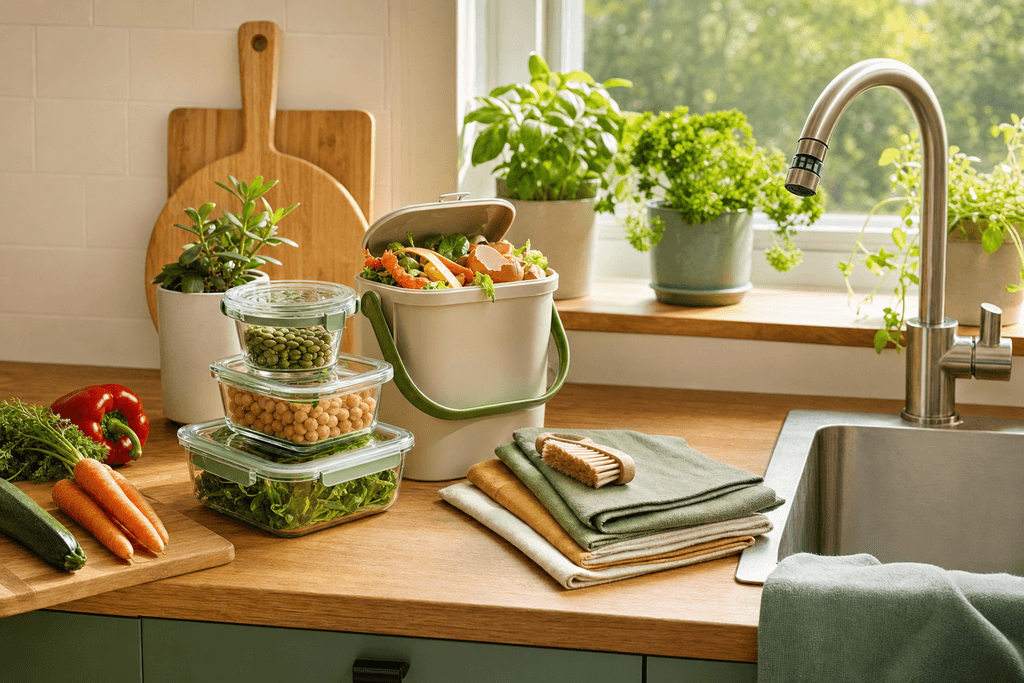
The first step is getting serious about meal planning and proper food storage. When you plan your meals for the week, you buy only what you need. Store leftovers in clear containers so everyone can see what’s available, and keep a “use first” section in your fridge for items that need eating soon.
Simple Kitchen Swaps That Make a Difference:
- Replace plastic wrap with beeswax wraps or silicone lids
- Switch from paper towels to cloth napkins and cleaning rags
- Use glass or stainless steel containers instead of disposable bags
- Keep reusable shopping bags by the door so you never forget them
- Start a small compost bin for food scraps
Water conservation in the kitchen doesn’t mean you need fancy equipment. Running your dishwasher only when full actually uses less water than hand washing, and scraping plates instead of pre-rinsing saves gallons each day. When you do wash by hand, fill one side of the sink with soapy water instead of letting the tap run.
Getting kids involved in composting basics turns waste reduction into something tangible they can understand. Even a small countertop bin for fruit peels and vegetable scraps shows them where food waste goes and why it matters. Research shows that families who involve children in sustainable practices see those habits stick long-term.
Energy-efficient cooking methods are simpler than you think. Using lids on pots, matching pan size to burner size, and batch cooking on weekends all cut down energy use without adding extra work to your routine.
Daily Kitchen Eco-Habits Checklist:
- Check fridge for items to use before shopping
- Run dishwasher only when completely full
- Add food scraps to compost bin
- Wipe counters with cloth instead of paper towels
- Turn off lights when leaving the kitchen
- Use reusable water bottles for the whole family
Bathroom Routines That Reduce Water Waste
The average family uses about 300 gallons of water every single day, and nearly 70% of that happens in the bathroom. That’s where the biggest opportunity for change lives, hiding in plain sight behind your shower curtain and under your sink. The bathroom might seem like a tough place to make eco-friendly changes stick, but it’s actually one of the easiest rooms to transform with habits that save both water and money.
Bathroom Routines That Reduce Water Waste
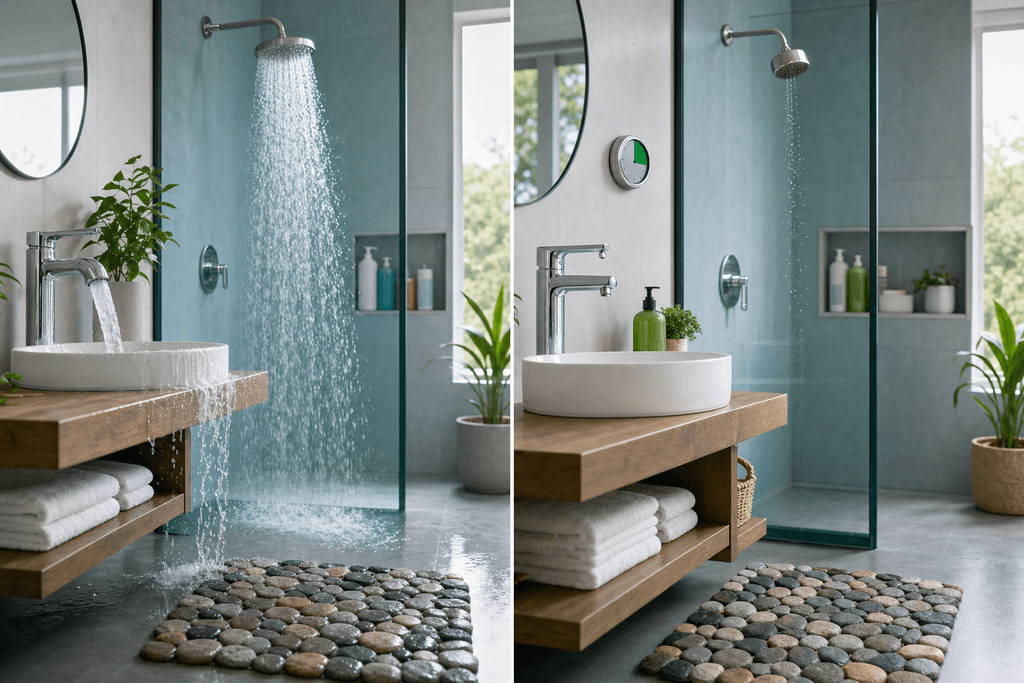
Shower time reduction is the single biggest water-saver you can implement. A standard showerhead uses 2.5 gallons per minute, so cutting just two minutes off each shower saves 5 gallons. For a family of four, that’s 7,300 gallons per year.
Water-Saving Stats That Matter:
- Low-flow showerheads reduce water use by 40% without losing pressure
- Turning off the tap while brushing teeth saves 8 gallons per day per person
- A leaky faucet dripping once per second wastes 3,000 gallons annually
- Shorter showers (5 minutes vs 8 minutes) save over 27 gallons per week per person
Teaching kids about water conservation works best when you make it concrete. Use a timer or play a specific song during showers so they know when time’s up. Studies on eco-friendly family habits show that children respond better to clear boundaries than vague instructions about “not wasting water.”
Sustainable personal care swaps don’t have to be complicated or expensive. Bar soap instead of liquid soap in plastic bottles, bamboo toothbrushes, and refillable containers for shampoo all reduce plastic waste. The key is switching one product at a time so it doesn’t feel overwhelming.
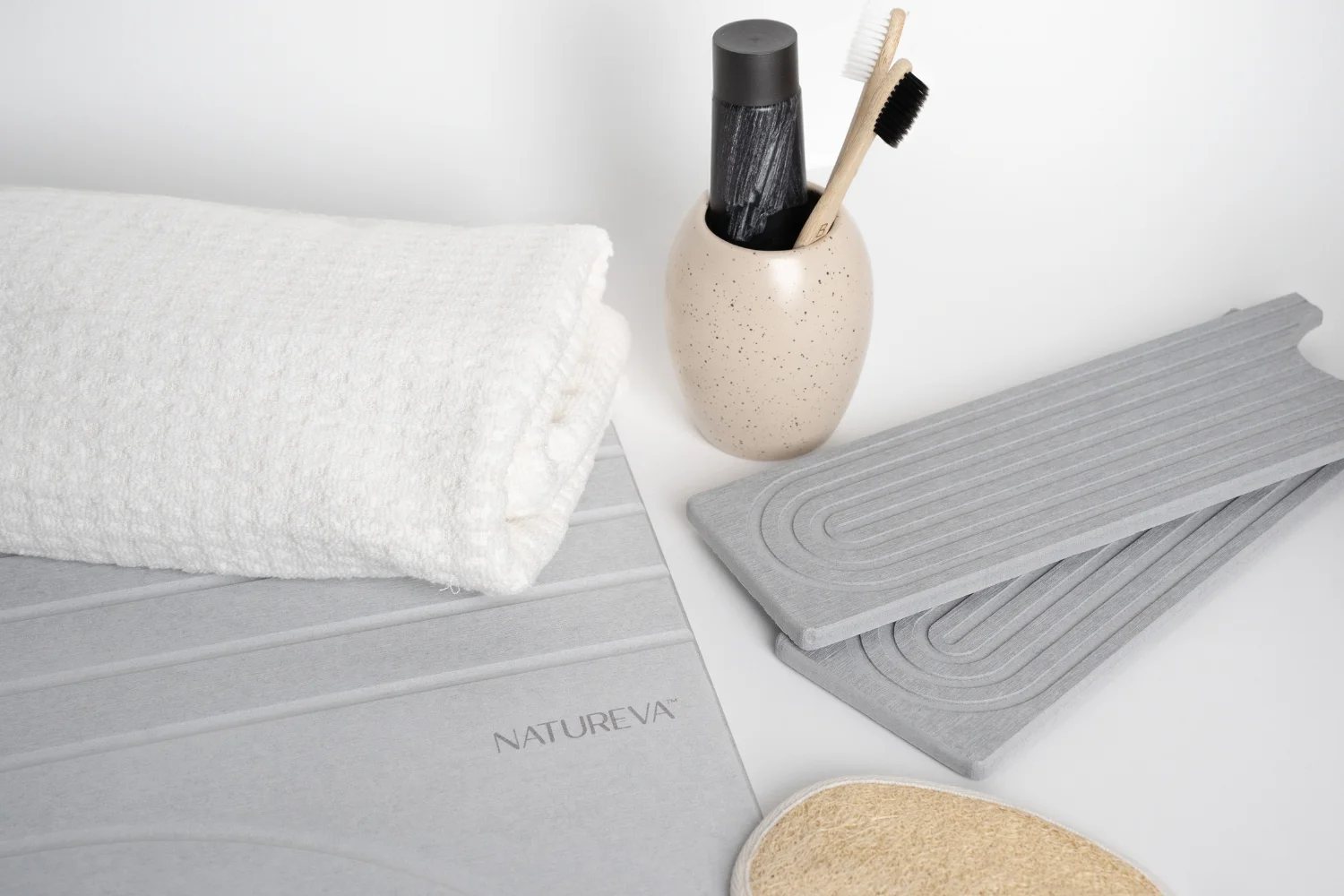
Speaking of reducing waste, our diatomite bath mats are a perfect example of a simple swap that makes a real difference. Unlike traditional bath mats that need constant washing and eventually end up in landfills, these naturally absorbent mats dry quickly and last for years without any maintenance.
Bathroom Product Swaps for Families:
- Bar soap instead of liquid soap in plastic pumps
- Bamboo toothbrushes that compost when you’re done
- Refillable containers for shampoo and conditioner
- Natural cleaning products like vinegar and baking soda
- Reusable cotton rounds instead of disposable makeup wipes
- Toilet paper made from recycled materials
Eco-friendly bathroom cleaning doesn’t require a cabinet full of specialty products. A spray bottle with equal parts water and white vinegar handles most surfaces, and baking soda works as a gentle scrub. These simple solutions are safer for kids and pets too.
Living Spaces That Teach Environmental Responsibility
Your living room, bedrooms, and common areas are where your family spends most of their time together, which makes them perfect classrooms for environmental responsibility. The habits you build in these spaces become the default way your kids think about consumption, energy use, and taking care of the planet. But here’s what most families miss: the best eco-friendly habits are the ones that become invisible because they’re just how things are done.
Energy-saving habits for electronics start with the simple rule of turning things off when you’re not using them. But phantom power drain from devices in standby mode accounts for about 10% of home energy use. Using power strips makes it easy to cut power to multiple devices at once.
Living Space Energy Savers:
- Plug electronics into power strips and turn them off at night
- Switch to LED bulbs which use 75% less energy than incandescent
- Open curtains during winter days for natural heat
- Close blinds during summer to keep rooms cooler
- Unplug chargers when not actively charging devices
- Use natural light whenever possible instead of overhead lights
Creating recycling stations that kids actually use comes down to making it easier to recycle than to throw things away. Set up clearly labeled bins in convenient spots, not hidden in a garage or basement. When recycling is visible and accessible, it becomes the path of least resistance.
Choosing sustainable furniture and home products means thinking about durability and materials. Solid wood furniture lasts decades instead of years, and buying secondhand keeps perfectly good items out of landfills. Research on family routines shows that children who grow up seeing quality over quantity make different purchasing decisions as adults.
Room-by-Room Eco-Friendly Habit Checklist:
- Living Room: Turn off lights when leaving, use natural light, unplug unused electronics
- Bedrooms: Open windows instead of AC when possible, use fans before air conditioning, donate outgrown clothes
- Home Office: Print double-sided, use digital files, recycle paper properly
- Entryway: Keep reusable bags by the door, have a spot for water bottles, create a donation box for items to give away
Indoor plants do more than look nice. They improve air quality, teach kids about caring for living things, and create natural conversation starters about how plants and people depend on each other. Start with easy plants like pothos or snake plants that forgive beginner mistakes.
Reducing clutter and overconsumption is about building the habit of asking “do we really need this?” before buying something new. When kids see you pause and consider purchases, they learn that not every want needs to become a purchase. The most sustainable product is the one you don’t buy in the first place.
Making eco-friendly choices visible works because kids learn by watching what you do, not what you say. When they see you choosing reusable over disposable, fixing things instead of replacing them, and thinking about where products come from and where they go, those patterns become their normal. That’s how habits stick across generations.
Why Some Eco Habits Stick While Others Fail
Most families abandon their eco friendly home goals within three weeks of starting them. The problem isn’t lack of caring about the environment. It’s that we’re fighting against how our brains actually work. When you understand the science behind habit formation, you realize that willpower alone never wins against convenience. The families who succeed at sustainable living don’t rely on motivation or guilt. They build systems that make green choices easier than the alternative.
The Habit Loop in Family Settings
Every habit follows a simple pattern that researchers call the habit loop. There’s a cue that triggers the behavior, the routine itself, and then a reward that makes your brain want to repeat it. In families, this loop gets more complicated because you’re dealing with multiple people and schedules. The key is designing your eco friendly home routines so they fit into existing family patterns rather than trying to create entirely new ones from scratch.
- Cues need to be visible and consistent across all family members
- Routines must take less effort than the old unsustainable habit
- Rewards should be immediate, not just long-term environmental benefits
- Each family member needs their own motivation for the same habit
Why Convenience Always Wins
You can have the best intentions about composting or reducing plastic use, but if the sustainable option takes more steps, it won’t last. This is why so many green initiatives fail in real homes. The recycling bin placed in the garage instead of the kitchen means people throw recyclables in the trash. The reusable bags left in the car trunk instead of by the door stay unused.
| Failed Approach | Why It Fails | Success Rate |
|---|---|---|
| Recycling in garage | Too many steps | 23% |
| Complex sorting rules | Requires thinking | 31% |
| Inconvenient locations | Breaks routine flow | 19% |
| All-or-nothing mindset | No room for mistakes | 15% |
Children as Habit Reinforcement Engines
Kids are actually better at forming new habits than adults because they have fewer ingrained routines to break. When children learn sustainable practices early, they become the household enforcers who remind parents about the rules. A five-year-old who learns about recycling at school will call out family members who throw plastic in the wrong bin. This peer pressure from within the family creates accountability that no app or reminder system can match.
- Children learn habits faster when they understand the “why” behind actions
- Kids create social pressure that keeps parents accountable
- Young family members adapt to new systems without resistance to change
Common Mistakes That Doom Green Efforts
The biggest mistake families make is trying to change everything at once. You decide to go zero-waste, start composting, switch to all natural cleaners, and eliminate plastic in the same week. This approach overwhelms everyone and guarantees failure. Your brain can only handle forming one new habit at a time, and families have multiple brains to coordinate.
Another fatal error is making sustainable choices feel like punishment. If going green means giving up convenience, comfort, or things people enjoy, resentment builds quickly. The families featured in our case studies below succeeded because they found eco friendly home solutions that actually improved their daily lives rather than making things harder.
- Attempting too many changes simultaneously
- Choosing inconvenient sustainable alternatives
- Relying on willpower instead of system design
- Not involving all family members in planning
- Focusing on perfection rather than progress
The Community Support Factor
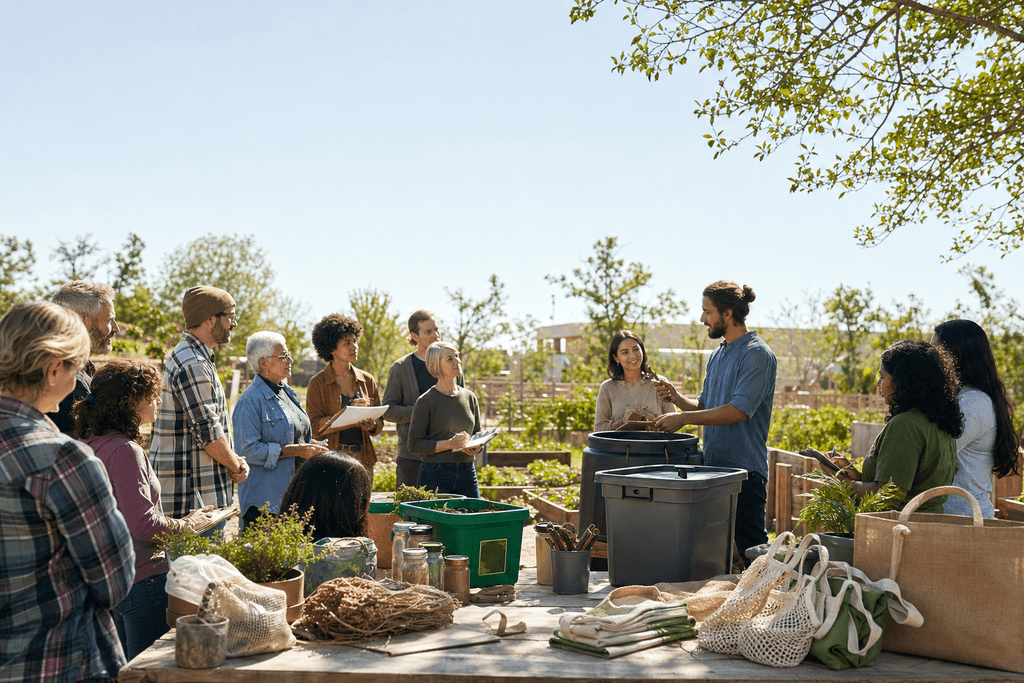
Families who connect with others pursuing similar goals stick with their eco friendly home habits three times longer than those going it alone. When your neighbors are also composting or your friend group talks about reducing waste, these behaviors become normalized. Community support transforms what feels like a personal sacrifice into a shared identity. Organizations like PureHabitat Initiative understand this dynamic, which is why their approach emphasizes community empowerment alongside individual education. According to research on sustainable living practices, social networks play a crucial role in maintaining long-term behavioral changes.
- Shared accountability increases habit retention by 65%
- Community validation makes sustainable choices feel normal
- Group problem-solving helps families overcome obstacles
- Social identity reinforces individual commitment
Real Families, Real Results
The Martinez Family, Houston TX
The Martinez family of four struggled with recycling for years until they placed bins directly in their kitchen instead of the garage. This single change increased their recycling rate from 20% to 87% within one month. They didn’t need more motivation. They needed less friction. Now their kids automatically sort waste without being asked, and the habit has spread to extended family members who visit regularly.
The Chen Household, Portland OR
Sarah Chen tried going zero-waste three times before it stuck. The difference the fourth time was starting with just one change: bringing reusable produce bags to the grocery store. After that became automatic over six weeks, she added composting. Then natural cleaners. Two years later, her family diverts 90% of waste from landfills. She credits the slow approach and community support from a local sustainability group for making the difference.
The Okonkwo Family, Atlanta GA
James and Aisha Okonkwo made their biggest breakthrough when they stopped trying to be perfect. They gave themselves permission to use disposable items when truly necessary while maintaining their core habits of composting, using reusable bags, and conserving water. This flexibility prevented burnout and actually led to more sustainable choices overall. Their teenage daughter now leads environmental initiatives at her high school, inspired by the practical approach she learned at home.
Wrap-up
Building an eco friendly home doesn’t mean you need to change everything overnight. The families that stick with green habits are the ones who start small, maybe with just one or two changes like switching to reusable water bottles or starting a simple recycling system. When you pick habits that actually fit your daily routine, they stop feeling like extra work and just become part of what you do.
The secret is celebrating those small wins along the way. When your kids remember to turn off the lights without being asked, that’s progress worth noticing. These little moments keep everyone motivated and show that your efforts actually matter.
Here’s what makes the biggest difference in the long run:
- Pick one or two habits to start, not ten
- Make it easy enough that everyone can participate
- Notice and appreciate the small changes
- Remember that your family’s choices influence neighbors and friends too
The PureHabitat Initiative helps families figure out which sustainable habits will actually work for their specific situation through our resource sharing and educational programs. What starts in your home often spreads to your community, and that’s when real change happens.
You probably have questions about getting started, what works best for different family sizes, or how to keep kids interested in eco friendly home practices. That’s completely normal, and there are some practical answers that might help you move forward.
Common Questions About Family Eco Habits
Making the switch to an eco friendly home brings up a lot of questions, especially when you’re trying to get the whole family on board. Most families wonder about the same things when they start this journey. Here are the answers to the most common concerns we hear from families just like yours.
How do I get my kids excited about eco-friendly habits?
Turn it into a game or challenge rather than a chore. Kids respond well when they can see immediate results, like tracking how many plastic bottles they’ve avoided using or watching a compost bin turn scraps into soil. Let them pick which habits to try first and give them ownership over specific tasks like sorting recycling or remembering reusable bags. The PureHabitat Initiative offers educational programs designed specifically to engage young people in sustainability through hands-on activities that make learning fun.
Do eco-friendly products actually save money?
Yes, but usually over time rather than immediately. Reusable items cost more upfront but eliminate the need for constant repurchasing of disposables. Energy-efficient appliances and LED bulbs cut utility bills month after month. The biggest savings come from reducing overall consumption, which happens naturally as you become more mindful about what you actually need versus what you’re used to buying.
How long does it take for new habits to stick?
Research shows it takes anywhere from 21 to 66 days for a new behavior to become automatic, depending on the complexity. Start with one or two simple changes and give them at least a month before adding more. The key is consistency, not perfection, so don’t get discouraged if someone forgets occasionally. Most families find that after three months, their new eco friendly home habits feel completely normal.
What should I do when family members resist changes?
Start with the changes that affect everyone the least and demonstrate quick wins. If someone really hates a particular swap, skip it and focus on areas where there’s agreement. Sometimes resistance comes from not understanding the why behind the change, so share information without lecturing. Let resistant family members see the benefits firsthand rather than forcing participation right away.
How can we maintain habits during busy periods?
Build systems that work on autopilot so you don’t have to think about them during stressful times. Keep reusable bags in the car, set up automatic bill pay for green energy, and prep grab-and-go items in reusable containers on Sunday. Focus on maintaining your easiest habits during crunch times and don’t beat yourself up about letting the harder ones slide temporarily. The goal is progress, not perfection.
Where can I find support and resources?
Community support makes a huge difference in staying motivated. PureHabitat Initiative provides resource sharing and educational programs specifically designed to help families adopt sustainable practices with practical guidance. Local community groups, neighborhood associations, and even online forums can connect you with others on the same journey. Having people to share tips with and celebrate small wins makes the whole process easier and more enjoyable.