The average kitchen contains over 50 plastic items that quietly leach chemicals into your food every single day, from spatulas to storage containers. Switching to natural materials doesn’t mean emptying your wallet—affordable alternatives exist that protect both your family’s health and the planet. Through PureHabitat Initiative’s resource sharing programs, communities are discovering how simple swaps to a sustainable kitchen create lasting change without the premium price tag.
Table of Contents
- Why Natural Materials Matter in Your Kitchen
- Essential Natural Material Kitchen Tools Under $30
- Natural Storage Solutions That Save Money
- Sustainable Cookware and Serveware on a Budget
- The Real Cost Savings of Natural Materials
- Start Your Natural Kitchen Journey Today
- Common Questions About Natural Kitchen Materials
Why Natural Materials Matter in Your Kitchen
Every year, the average American household throws away about 185 pounds of plastic, and a big chunk of that comes straight from the kitchen. Your spatulas, cutting boards, storage containers, and utensils might seem harmless, but many synthetic kitchen products release chemicals into your food and end up polluting our oceans and landfills. The good news is that switching to natural materials doesn’t have to drain your wallet, and the long-term benefits make it worth every penny. At PureHabitat Initiative, we help communities understand how small changes in their kitchens can create healthier homes and a cleaner planet.
The Hidden Dangers of Plastic Kitchenware
Plastic kitchen items might be cheap upfront, but they come with risks you can’t see. When you heat plastic containers or use worn plastic utensils, tiny chemicals can leak into your food. These chemicals, like BPA and phthalates, have been linked to hormone problems and other health issues according to research from the National Institute of Environmental Health Sciences.
Here’s what happens when plastic takes over your kitchen:
- Chemicals seep into hot foods and acidic ingredients like tomato sauce
- Scratched plastic surfaces harbor bacteria that are hard to clean
- Microplastics break off and end up in your meals
- Disposable plastic items create mountains of waste that never fully decompose
How Synthetic Products Hurt the Environment
The environmental cost of synthetic kitchen products goes way beyond your trash can. Most plastic kitchen items are made from petroleum, a non-renewable resource that requires lots of energy to process. When these products break or wear out, they don’t just disappear.
- Plastic takes 400 to 1000 years to break down in landfills
- Only about 9% of all plastic ever made has been recycled
- Ocean plastic pollution harms marine life and enters the food chain
- Manufacturing synthetic materials releases greenhouse gases that contribute to climate change
Natural Materials Save Money Over Time
While a bamboo cutting board might cost more than a plastic one at first, natural materials last much longer and don’t need replacing as often. A quality wooden spoon can last decades with basic care, while plastic utensils crack and melt within a year or two. This makes natural options smarter for your budget in the long run.
| Material Type | Average Initial Cost | Typical Lifespan | Replacement Frequency |
|---|---|---|---|
| Plastic Utensils | $10-15 | 1-2 years | Every 1-2 years |
| Bamboo Utensils | $20-30 | 5-10 years | Every 5-10 years |
| Plastic Cutting Board | $8-12 | 1-3 years | Every 2-3 years |
| Wood Cutting Board | $25-40 | 10-20 years | Every 10-20 years |
| Plastic Storage Containers | $15-25 | 2-4 years | Every 2-4 years |
| Glass Storage Containers | $30-50 | Lifetime (if not broken) | Rarely |
Natural materials also keep your food safer because they don’t release chemicals when exposed to heat or acids. Wood and bamboo have natural antibacterial properties, and glass is completely inert, meaning nothing transfers from the container to your food. For more practical tips on making your kitchen more eco-friendly without spending a fortune, check out this guide on upgrading your kitchen on a budget.
Comparing Environmental Impact
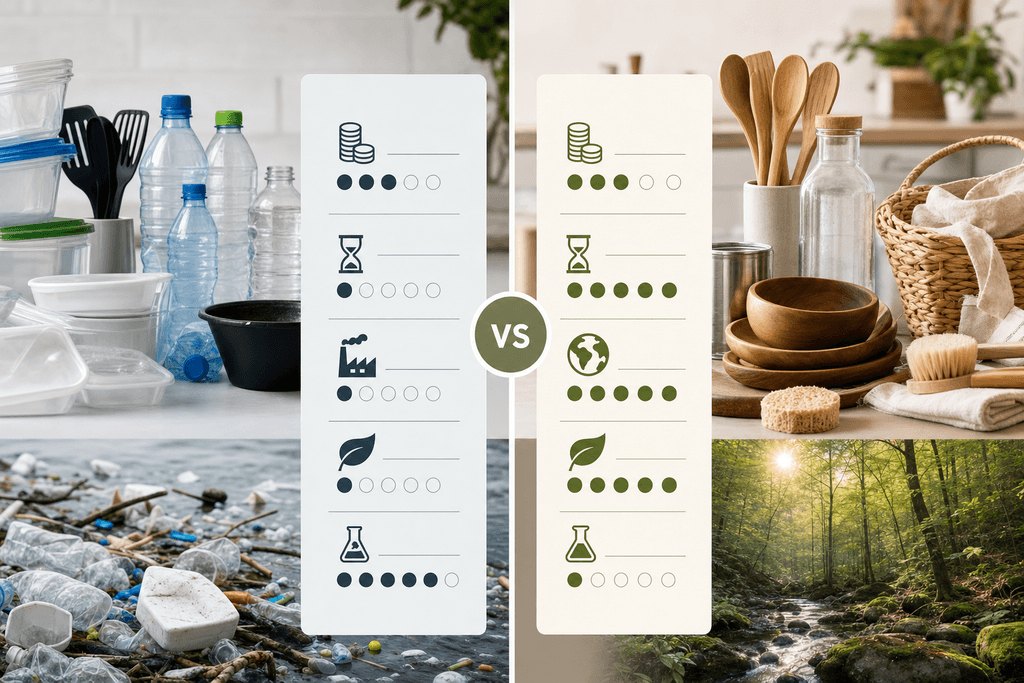
The difference between synthetic and natural materials becomes crystal clear when you look at their full environmental footprint. Natural materials come from renewable sources and break down naturally when their useful life ends, while synthetic products stick around for centuries.
| Impact Category | Plastic/Synthetic | Natural Materials |
|---|---|---|
| Source | Petroleum (non-renewable) | Plants/minerals (renewable) |
| Decomposition Time | 400-1000 years | 1-5 years |
| Recycling Rate | 9% | Biodegradable/compostable |
| Chemical Leaching | High risk | Minimal to none |
| Carbon Footprint | High | Low to neutral |
Making the switch to natural materials in your kitchen supports both your health and the planet’s future. The initial investment pays off through durability, safety, and peace of mind knowing you’re not contributing to plastic pollution.
Essential Natural Material Kitchen Tools Under $30
Most people don’t realize that switching to a sustainable kitchen doesn’t require emptying your wallet or buying everything at once. The truth is, some of the best natural material kitchen tools cost less than their plastic counterparts and last way longer. Starting with basic utensils and tools made from bamboo, wood, and stone can transform your cooking space without the budget stress. These materials have been used for thousands of years because they work, and now they’re making a comeback as people realize plastic isn’t doing us any favors.
Essential Natural Material Kitchen Tools Under $30
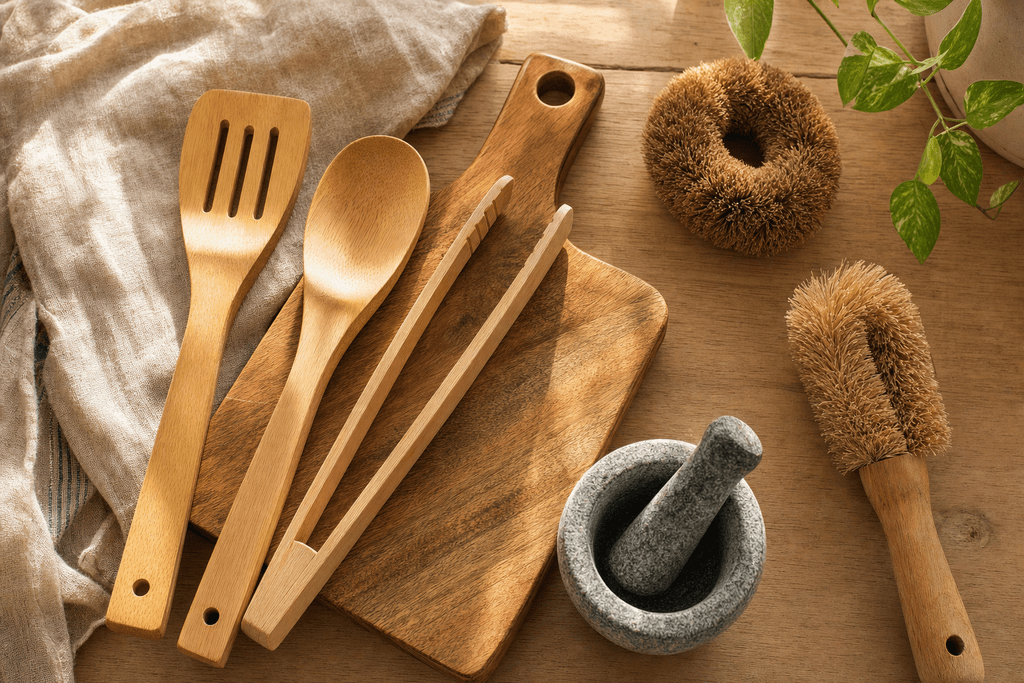
Bamboo utensils are probably the easiest swap you can make today. They’re naturally antimicrobial, which means fewer germs hanging around on your cooking spoons. A full set of bamboo spatulas, spoons, and tongs usually runs between $15 and $25, and they won’t scratch your pots like metal tools do.
- Bamboo cooking utensils: $15-25 for a complete set
- Wooden cutting boards: $12-30 depending on size
- Natural fiber brushes: $3-8 each
- Stone mortar and pestle: $20-30 for quality sets
- Coconut fiber scrubbers: $5-10 for a pack
Wooden cutting boards deserve special attention because they’re actually safer than plastic ones for food prep. Research shows that wood has natural properties that prevent bacteria from multiplying, while plastic boards develop grooves where germs love to hide. You can find solid wood boards at thrift stores for under $10, or buy new ones made from sustainably harvested wood for around $20 to $30.
Natural fiber cleaning tools might seem like a small detail, but they make a real difference. Coconut fiber scrubbers and plant-based brushes break down naturally instead of shedding microplastics into your water system. They also work better than you’d expect, handling stuck-on food without the chemical smell of synthetic sponges.
Shopping Checklist for Natural Kitchen Tools
- Bamboo utensil set: $15-25
- Medium wooden cutting board: $12-20
- Natural fiber dish brush: $5-8
- Coconut scrubber pack: $5-10
- Stone mortar and pestle: $20-30 (optional but worth it)
- Total budget range: $57-93 for complete basics
The best places to find these items include local kitchen supply stores, farmers markets, and even big box retailers that now carry sustainable options. PureHabitat Initiative also provides resources and connections to suppliers who offer quality natural materials at community-friendly prices, making it easier to find what you need without the guesswork.
Natural Storage Solutions That Save Money
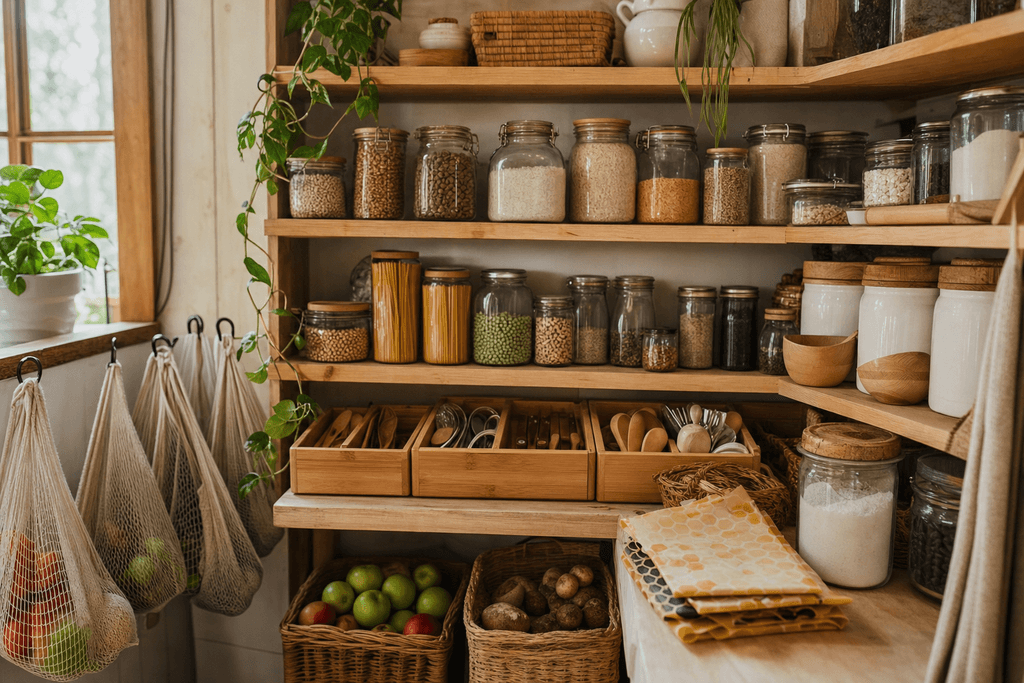
Storage is where most kitchens accumulate the most plastic, but it’s also where you can save the most money by getting creative. Glass jars from pasta sauce, pickles, or jam work perfectly for storing dry goods, and they cost exactly zero dollars if you’re already buying those products. The key is looking at what you already have before buying anything new. Natural storage materials like glass, bamboo, and cotton actually keep food fresher longer because they allow proper air circulation and don’t leach chemicals into your food.
Natural Storage Solutions That Save Money
Glass jar repurposing is the ultimate budget hack for sustainable kitchen storage. Those jars you’d normally recycle can hold rice, beans, flour, coffee, and just about anything else. Just remove the labels with hot water and soap, and you’ve got free storage that looks clean and organized.
| Material | Best For | Cost Range |
|---|---|---|
| Glass jars | Dry goods, leftovers | Free-$15 |
| Bamboo organizers | Drawers, utensils | $10-25 |
| Cotton bags | Produce, bulk items | $8-15 |
| Ceramic canisters | Countertop storage | $15-30 |
| Beeswax wraps | Food covering | $12-20 |
Bamboo drawer organizers keep your utensils and tools sorted without the flimsy plastic trays that crack after a few months. They’re sturdy enough to last for years and usually cost between $10 and $25 depending on size. The expandable ones are especially useful because they adjust to fit different drawer sizes.
Cotton and linen produce bags replace those thin plastic bags at the grocery store. A set of five reusable bags costs around $10 to $15 and pays for itself quickly since some stores offer discounts for bringing your own bags. They also keep produce fresher because the natural fabric breathes, unlike plastic that traps moisture and speeds up rotting.
Natural beeswax wraps work as a reusable alternative to plastic wrap and aluminum foil. They mold to bowls and food items using the warmth of your hands, creating a seal that keeps things fresh. A starter pack costs about $12 to $20 and lasts for up to a year with proper care, which beats buying roll after roll of single-use plastic wrap.
For more ideas on creating a sustainable kitchen with natural materials, check out this comprehensive guide on eco-friendly kitchen products that covers storage solutions and more.
Sustainable Cookware and Serveware on a Budget
Cookware is where you’ll make the biggest investment in your sustainable kitchen, but it’s also where natural materials shine the brightest. Cast iron, stoneware, and bamboo pieces can literally last generations if you take care of them, which makes them cheaper in the long run than replacing nonstick pans every few years. The trick is building your collection slowly, starting with the pieces you use most often. You don’t need to replace everything at once, and honestly, that’s not even the best approach because it helps to learn what works for your cooking style.
Cast iron cookware is the ultimate lifetime investment for any kitchen. A basic 10-inch skillet costs between $20 and $40, and with proper seasoning, it becomes naturally nonstick without any chemical coatings. Cast iron also adds a small amount of iron to your food, which is actually beneficial for most people.
- Start with one cast iron skillet: Most versatile piece for everyday cooking
- Add stoneware baking dishes: Perfect for casseroles and roasting
- Include bamboo serving pieces: Lightweight and naturally beautiful
- Look for wooden salad bowls: They don’t react with acidic dressings
- Check thrift stores first: Quality pieces often show up for a fraction of retail price
Stoneware and ceramic baking dishes handle high heat without releasing any chemicals, unlike some modern nonstick coatings. They distribute heat evenly, which means better cooking results and less chance of burning. You can find quality pieces for $15 to $30, and they work for everything from lasagna to roasted vegetables.
Bamboo serving bowls and platters bring a natural look to your table without the weight of ceramic or the breakability of glass. They’re perfect for salads, bread, and snacks, and they cost between $10 and $25 depending on size. The best part is they’re light enough for kids to handle safely.
Priority List for Building Your Natural Cookware Collection
- Month 1: One cast iron skillet ($20-40)
- Month 2: Stoneware baking dish ($15-30)
- Month 3: Wooden cutting board and utensils ($20-35)
- Month 4: Bamboo serving pieces ($15-25)
- Month 5: Additional cast iron or stoneware as needed ($20-40)
- Total over 5 months: $90-170 for complete natural cookware setup
Secondhand shopping deserves special mention because it’s where you’ll find the best deals on quality natural material cookware. Thrift stores, estate sales, and online marketplaces often have cast iron pieces that just need a good cleaning and re-seasoning. Older pieces were often made with better materials than modern budget options, so you’re actually getting superior quality for less money.
PureHabitat Initiative offers resources that connect communities with suppliers and educational materials about choosing and maintaining natural material cookware. Through our resource sharing programs, we help people find affordable options and learn the skills needed to care for these items properly, making sustainable kitchen choices accessible to everyone regardless of budget.
For a deeper understanding of sustainable kitchen design principles and material choices, this guide to sustainable kitchen design provides valuable insights into long-term planning and material selection.
The Real Cost Savings of Natural Materials
Most people think natural materials cost more upfront, and they’re right. But here’s what the numbers don’t show at first glance: a bamboo cutting board that costs $25 will outlast five plastic ones that cost $8 each. When you break down the actual cost per year of use, natural materials in your sustainable kitchen become the budget-friendly choice. The math gets even better when you factor in health benefits and environmental impact. Communities that switch to natural materials see fewer replacements, less waste hauling costs, and reduced exposure to chemicals that can lead to health problems down the road.
Natural materials last 5-10 times longer than their plastic counterparts, with wooden spoons lasting 10+ years compared to 1-2 years for plastic versions.
Five Year Cost Breakdown
Looking at real numbers over time tells a different story than the price tag at checkout. The table below shows what you’ll actually spend on common kitchen items over five years.
| Kitchen Item | Plastic Cost (5 Years) | Natural Material Cost (5 Years) | Savings |
|---|---|---|---|
| Cutting Board | $40 (5 replacements) | $25 (1 purchase) | $15 |
| Utensil Set | $60 (3 replacements) | $35 (1 purchase) | $25 |
| Storage Containers | $75 (4 replacements) | $50 (1 purchase) | $25 |
| Dish Brushes | $30 (15 replacements) | $20 (5 replacements) | $10 |
| Total | $205 | $130 | $75 |
Hidden Health Savings
The financial benefits go beyond just replacement costs. Plastic kitchen items leach chemicals like BPA and phthalates into your food, especially when heated or scratched. While it’s hard to put an exact dollar amount on avoiding these exposures, research shows these chemicals are linked to health issues that come with their own costs.
- Reduced exposure to endocrine-disrupting chemicals found in plastics
- Lower risk of microplastic consumption from degraded plastic items
- Better food safety with naturally antimicrobial materials like bamboo
- Fewer respiratory issues from off-gassing synthetic materials
Community Level Savings
When entire neighborhoods make the switch, the benefits multiply. PureHabitat Initiative works with communities to access natural materials through resource sharing programs, making these items even more affordable. Communities report spending less on waste management and seeing improved overall health outcomes.
Communities participating in sustainable kitchen programs reduce their kitchen-related waste by an average of 60% within the first year.
- Lower municipal waste disposal costs from reduced plastic waste
- Decreased environmental cleanup expenses in local areas
- Shared purchasing power through community buying programs
- Educational resources that prevent costly purchasing mistakes
Start Your Natural Kitchen Journey Today
Switching to a sustainable kitchen with natural materials doesn’t have to drain your wallet or happen overnight. The best approach is to pick one category, maybe wooden utensils or bamboo cutting boards, and build from there as your budget allows. You’ll notice the difference in how these items feel and perform compared to plastic alternatives, and your body will thank you for reducing chemical exposure over time.
Natural materials might cost a bit more upfront, but they last longer and often work better than their synthetic counterparts. A good wooden spoon can outlive ten plastic ones, and it won’t leach anything weird into your food while you’re cooking. The environmental impact adds up too, since every plastic item you replace is one less thing sitting in a landfill for the next 500 years.
The PureHabitat Initiative offers educational resources and community support to help you make these changes without feeling overwhelmed. We connect people with practical information about sustainable living that actually fits into real budgets and busy schedules. Sometimes the hardest part is just knowing where to start and having someone to ask questions along the way.
Small steps matter more than perfect execution. Whether you’re replacing one sponge or redesigning your entire pantry storage system, you’re moving in the right direction. The questions below cover some common concerns people have when they’re just getting started with natural materials in their kitchen.
Common Questions About Natural Kitchen Materials
Switching to a sustainable kitchen with natural materials brings up a lot of practical questions. People want to know if they’re making smart choices with their money, how much work these items require, and whether they’ll actually hold up over time. These are fair concerns, especially when you’re trying to balance your budget with your values. Below are the most common questions we hear about making the move to natural kitchen materials, along with straightforward answers that can help you decide what works best for your home.
Are natural materials really more affordable than plastic?
Natural materials can actually cost less upfront than you’d think, especially when you shop smart. Bamboo utensils, wooden cutting boards, and cotton dish towels often match or beat the price of their plastic counterparts at discount stores and online retailers. The real savings show up over time because quality natural materials last years longer than cheap plastic items that crack, stain, or need replacing every few months.
How do I care for bamboo and wooden kitchen items?
Caring for bamboo and wood is simpler than most people expect. Hand wash these items with mild soap and warm water, then dry them right away instead of letting them sit in the sink. Every month or so, rub them down with food-safe mineral oil to prevent cracking and keep them looking good. This basic routine takes just a few extra seconds and helps your items last for years.
Where can I find budget-friendly natural kitchen products?
Budget-friendly natural kitchen products pop up in more places than you might realize. Discount retailers, thrift stores, and online marketplaces often carry bamboo utensils, wooden spoons, and glass storage containers at reasonable prices. PureHabitat Initiative also connects communities with resources for sustainable living, including guidance on where to find affordable eco-friendly kitchen items in your area. Local farmers markets and community swap events can be goldmines for gently used natural kitchen tools too.
Do natural materials last as long as synthetic options?
Natural materials often outlast synthetic ones when you treat them right. A good wooden cutting board can serve you for decades, while plastic boards develop deep grooves that harbor bacteria within a year or two. Bamboo utensils resist heat better than plastic spatulas that melt or warp. The key is choosing quality items and following basic care instructions.
Are all natural materials safe for food contact?
Most natural materials are safe for food contact, but you should still check for food-grade certification. Untreated wood, bamboo, stainless steel, and glass are generally safe choices for a sustainable kitchen. Watch out for items with unknown finishes or treatments that might contain harmful chemicals. Stick with products labeled as food-safe or food-grade to avoid any issues.
How can PureHabitat Initiative help me make the switch?
PureHabitat Initiative offers educational programs and resource sharing specifically designed to make sustainable living accessible and practical. We provide workshops on choosing and maintaining natural materials, connect you with affordable eco-friendly products, and offer community support as you transition your kitchen. Our programs focus on real solutions that fit actual budgets, not just expensive ideals that only work for some people.