You’ve probably heard that going green means spending more green, but that’s one of the biggest myths holding people back from sustainable shopping. The truth is that eco friendly products are more affordable than ever, and many actually save you money over time compared to their throwaway alternatives. At PureHabitat Initiative, we’ve seen countless families discover that budget-friendly sustainable living isn’t just possible, it’s practical and rewarding for both your wallet and the planet.
Table of Contents
- The Real Cost of Sustainable vs Traditional Products
- Smart Shopping Strategies That Save Money and the Planet
- Buying Strategies That Work
- Best Places to Shop
- Making Sustainable Shopping Work for Your Budget
- Your Path to Affordable Sustainable Living
- Common Questions About Budget Sustainable Shopping
The Real Cost of Sustainable vs Traditional Products
Most people think eco friendly products cost way more than regular stuff, but that’s only half the story. When you look at what you actually spend over time, sustainable shopping often saves you money. The trick is understanding which products are worth the upfront cost and which ones pay for themselves down the road. At PureHabitat Initiative, we help communities see past the sticker price to make smarter choices that protect both their wallets and the planet.
Why Sustainable Products Seem Expensive
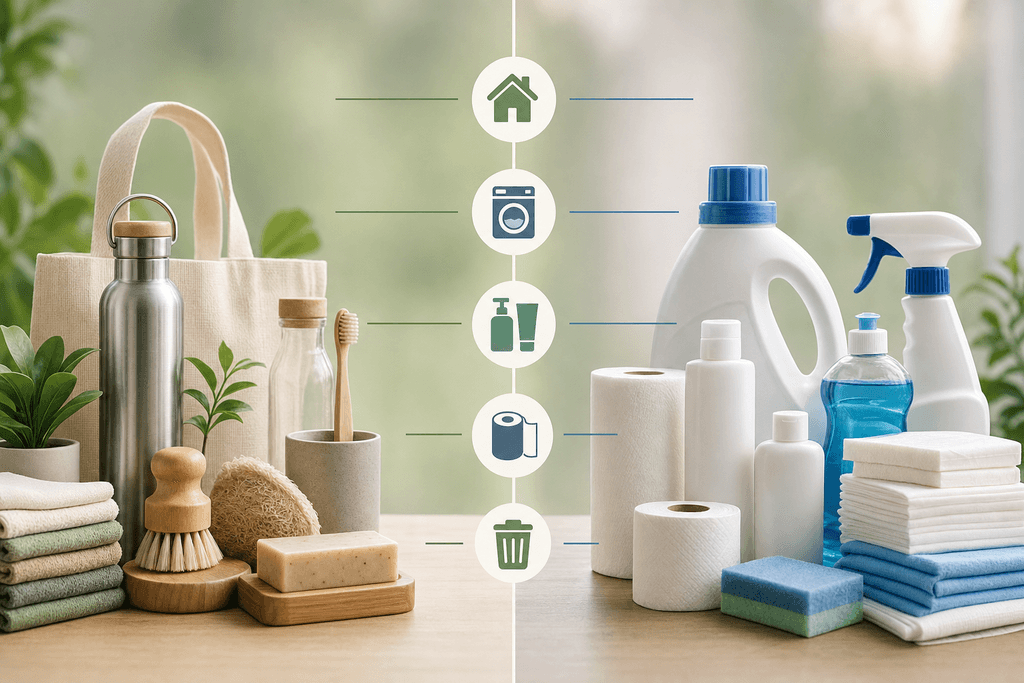
The price gap between eco friendly products and conventional ones exists for real reasons. Sustainable items often use better materials, pay workers fairly, and follow stricter environmental standards. But here’s what most stores won’t tell you about those cheaper conventional products.
- Traditional products use cheap materials that break down faster
- Manufacturing shortcuts create hidden health risks in your home
- Environmental damage from production gets passed to taxpayers through cleanup costs
- Planned obsolescence means you buy replacements more often
Comparing Real World Prices
Let’s look at actual numbers from common household items. This table shows what you’d pay upfront and over five years for both options.
| Product Category | Conventional Price | Sustainable Price | 5-Year Cost Conventional | 5-Year Cost Sustainable |
|---|---|---|---|---|
| Cleaning Supplies | $4 per bottle | $8 per bottle | $240 | $160 |
| Reusable Bags | $0.10 each | $15 for set | $260 | $15 |
| Water Bottles | $1 each | $25 reusable | $520 | $25 |
| LED Bulbs | $1 incandescent | $8 LED | $75 | $24 |
The numbers tell a clear story. Sustainable shopping actually costs less when you count replacements and energy use. According to research on sustainable consumption patterns, more shoppers are catching on to these long-term savings.
Market Changes Making Sustainable Cheaper
The sustainable products market has changed a lot in recent years. More companies making eco friendly products means prices keep dropping. What cost $50 five years ago might only cost $30 today.
- Production scale has increased as demand grows
- New manufacturing methods cut costs without sacrificing quality
- Competition between brands drives prices down
Big retailers now stock sustainable options right next to conventional products. This wasn’t true even three years ago. The price difference keeps shrinking as eco friendly products become mainstream.
Hidden Costs Nobody Talks About
Cheap conventional products come with costs that don’t show up on receipts. These expenses hit your health, your home, and your community over time.
- Toxic chemicals in cleaners cause respiratory problems and medical bills
- Plastic waste clogs local drainage systems requiring tax-funded repairs
- Poor quality items fill landfills faster creating disposal costs
- Energy-wasting appliances increase utility bills every month
When you add up doctor visits, higher electric bills, and constant replacements, those bargain prices don’t look so good anymore. Sustainable shopping cuts these hidden expenses while giving you products that actually last.
Smart Shopping Strategies That Save Money and the Planet
Most people think sustainable shopping means spending more money, but that’s actually backwards. The truth is that eco friendly products often cost less over time because they’re built to last and reduce waste. The trick is knowing how to shop smart so you don’t break the bank while trying to help the environment. Once you understand a few basic strategies, you’ll find that buying sustainable doesn’t have to mean choosing between your wallet and your values.
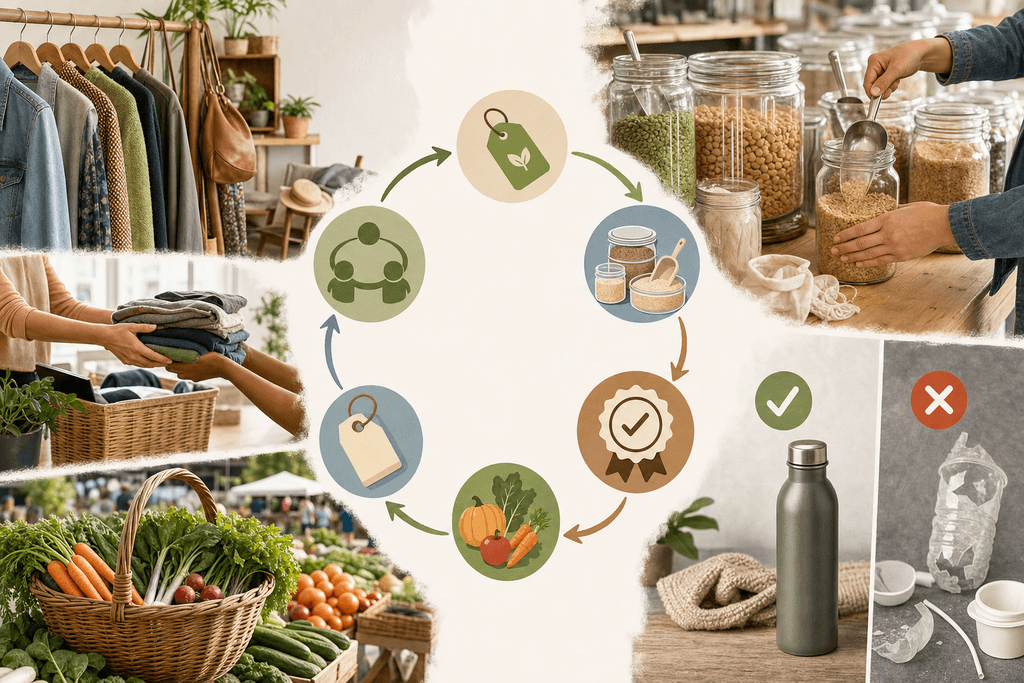
The secondhand market has become one of the best places to find quality eco friendly products at a fraction of retail prices. Thrift stores, consignment shops, and online resale platforms offer everything from clothing to furniture that’s already been made, which means buying used prevents new resources from being extracted and manufactured. Plus, you’re keeping perfectly good items out of landfills.
Buying Strategies That Work
- Buy secondhand first before looking at new items, especially for clothing, furniture, and household goods
- Purchase in bulk to cut down on packaging waste and lower the cost per unit significantly
- Choose quality over quantity by investing in items that last years instead of cheap versions you’ll replace constantly
- Use community sharing programs and tool libraries for items you only need occasionally
- Shop seasonal and local to reduce transportation costs and support nearby businesses
- Watch for sales from sustainable brands that often discount items during seasonal transitions
Bulk purchasing deserves special attention because it’s one of the easiest ways to save money while reducing your environmental impact. When you buy larger quantities of items you use regularly, you’re paying less per unit and dealing with way less packaging. This works especially well for household staples like cleaning supplies, grains, nuts, and personal care products.
Smart Shopping Strategies That Save Money and the Planet
Community sharing programs are changing how people think about ownership. Instead of everyone on your block owning a ladder they use twice a year, tool libraries let neighbors borrow what they need. PureHabitat Initiative’s resource sharing program connects communities with these kinds of sustainable solutions, making it easier to access quality products without the full purchase price.
☐ Check secondhand options before buying new
☐ Compare bulk pricing at local co-ops
☐ Join community sharing groups in your area
☐ Sign up for sustainable brand newsletters for sale alerts
☐ Make a list of quality items to invest in gradually
☐ Research local farmers markets for seasonal deals
Essential Eco Friendly Products Worth the Investment
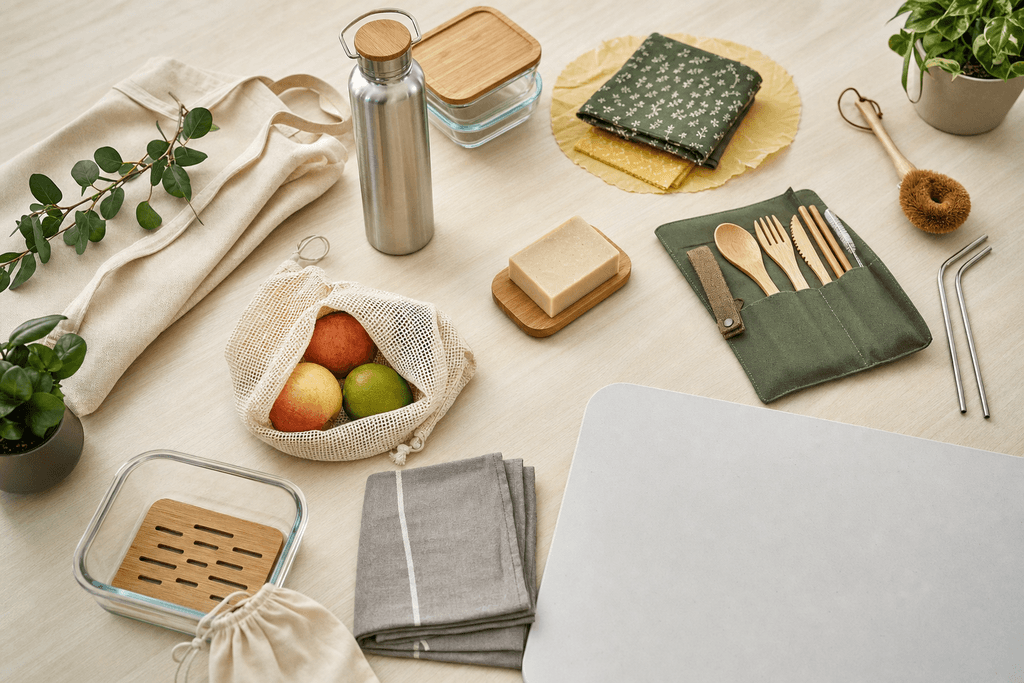
Some sustainable purchases pay for themselves so quickly that not buying them actually costs you money. The key is identifying which eco friendly products provide real value instead of just feeling good about your purchase. Reusable items that replace disposables are usually the best place to start because you can calculate exactly how much you’ll save. A reusable water bottle that costs fifteen dollars replaces hundreds of plastic bottles over just a few months.
Kitchen and bathroom essentials top the list for smart sustainable investments. Reusable food storage bags, cloth napkins, and washable cleaning cloths eliminate the need to constantly buy disposable versions. The math is simple but powerful: the average family spends over $200 per year on paper towels alone, which means switching to cloth versions pays for itself in weeks.
| Product Type | Annual Savings | Payback Period |
|---|---|---|
| Reusable water bottles | $300-500 | 2-4 weeks |
| Cloth napkins | $150-200 | 1-2 months |
| LED bulbs | $75-100 | 6-8 months |
| Reusable food bags | $100-150 | 3-4 months |
Energy-efficient products deserve special consideration because they lower your utility bills month after month. LED light bulbs cost more upfront but use 75% less energy and last 25 times longer than traditional bulbs. Smart power strips prevent phantom energy drain from devices on standby. These aren’t just eco friendly products that help the environment, they’re investments that put money back in your pocket.
Multi-purpose items are the secret weapon of budget sustainable shopping. A quality cast iron pan can replace multiple non-stick pans, works on any heat source, and lasts generations. Vinegar and baking soda can handle most cleaning jobs that people buy specialized products for. Through PureHabitat Initiative’s educational programs, communities learn how to identify these versatile solutions that simplify life while reducing both costs and environmental impact.
Health benefits add another layer of value to sustainable products. Non-toxic cleaning supplies and personal care items protect your family from harmful chemicals while being gentler on waterways. Businesses are increasingly recognizing this connection, as detailed in research on eco-friendly consumer trends, which shows how health and environmental concerns drive purchasing decisions together.
Where to Find Affordable Sustainable Products
Knowing what to buy matters less if you don’t know where to find it at prices that work for your budget. The good news is that affordable sustainable shopping options have expanded dramatically in recent years. Online marketplaces now specialize in connecting conscious consumers with budget-friendly eco friendly products, while local options provide hands-on shopping experiences. The challenge isn’t finding sustainable options anymore, it’s knowing which sources offer the best combination of quality and value.
Online platforms have made sustainable shopping more accessible than ever. Direct-to-consumer brands cut out middlemen to offer competitive pricing on everything from bamboo toothbrushes to organic bedding. Many of these companies also provide detailed information about their sustainable packaging practices, helping you understand the full environmental impact of your purchase.
Best Places to Shop
- Online sustainable marketplaces that curate eco friendly products from multiple brands
- Local thrift stores for secondhand items in excellent condition at deep discounts
- Community swap events where you can trade items you no longer need
- Buy-nothing groups on social media for free items in your neighborhood
- Discount retailers that now carry dedicated eco friendly product lines
- Farmers markets for local, seasonal products with minimal packaging
- Direct brand websites during seasonal sales and clearance events
Local options often provide the best deals because you’re cutting out shipping costs and supporting nearby businesses. Thrift stores and consignment shops have become treasure troves for eco-conscious shoppers who know what to look for. The selection changes constantly, which means regular visits can uncover high-quality sustainable items at a fraction of their original cost.
Essential Eco Friendly Products Worth the Investment
☐ Search for local buy-nothing groups on social media
☐ Find community swap events in your area
☐ Visit thrift stores on discount days
☐ Subscribe to sustainable brand email lists
☐ Check discount retailers for eco product sections
☐ Explore online sustainable marketplaces
☐ Connect with PureHabitat Initiative programs
Community programs offer another avenue for accessing sustainable products without the full retail price. Buy-nothing groups and neighborhood swap events let you exchange items you no longer need for things others are giving away. PureHabitat Initiative’s educational programs teach communities how to create DIY alternatives to common products, which often costs pennies compared to store-bought versions while being just as effective.
Timing your purchases strategically can lead to significant savings on sustainable products. Many eco friendly brands offer deep discounts during seasonal transitions, end-of-year sales, and special promotional periods. Signing up for newsletters from your favorite sustainable companies means you’ll know about these sales before items sell out. The key is planning ahead for items you know you’ll need rather than impulse buying just because something is on sale.
Making Sustainable Shopping Work for Your Budget
Most people think sustainable shopping means spending twice as much money for half the products. That’s actually backwards when you look at the real numbers. The truth is that switching to eco friendly products often saves money over time, but the upfront costs can feel scary. Understanding how these costs break down makes the whole transition less overwhelming and more practical for everyday families.
Breaking Down the Real Costs
The sticker shock of sustainable shopping comes from comparing single purchases instead of looking at the bigger picture. A reusable water bottle costs $20 while a plastic bottle costs $2, but that math changes fast when you buy water every day.
| Product Type | Upfront Cost | Annual Savings |
| Reusable bags | $15 | $120 |
| Water bottle | $20 | $730 |
| Food containers | $40 | $300 |
| Cloth napkins | $25 | $85 |
These numbers show why thinking long-term changes everything about sustainable shopping. The PureHabitat Initiative helps communities understand these calculations through our resource sharing programs, making it easier to see where your money actually goes.
Small Steps Add Up Faster Than You Think
Nobody needs to replace everything in their house overnight. That approach burns through savings and creates unnecessary stress. Starting with just a few key swaps makes the transition manageable while still creating real impact.
- Replace disposable items you use daily first for fastest savings
- Buy one quality reusable product per month instead of bulk purchasing
- Focus on items that serve multiple purposes to stretch your budget
- Join community sharing programs to access products without buying everything new
Environmental Impact Meets Financial Sense
The environmental benefits of sustainable shopping align perfectly with budget-conscious choices. According to research on sustainability case studies, communities that adopt eco friendly products see measurable reductions in waste and spending within the first year.
Every reusable product keeps hundreds of disposable items out of landfills. A single person switching to reusable shopping bags prevents roughly 500 plastic bags from entering the waste stream annually. That same switch saves about $120 per year in bag fees and replacement costs.
| Impact Area | Annual Reduction |
| Plastic waste | 300 pounds |
| Carbon emissions | 1,200 pounds |
| Water usage | 8,000 gallons |
Community Support Changes the Game
Trying to figure out sustainable shopping alone feels like solving a puzzle with missing pieces. Community programs make eco friendly products more accessible by sharing resources and knowledge that would cost hundreds to learn independently.
- Access bulk buying programs that lower per-unit costs significantly
- Learn from others who’ve already tested products and know what works
- Share expensive items like carpet cleaners or specialty tools
- Get education on proper product care to maximize lifespan
Our environmental education programs at PureHabitat Initiative connect people with these community networks. This support system turns sustainable shopping from an expensive solo mission into an affordable group effort. The difference between going it alone and having community backing often determines whether people stick with eco friendly products or give up after a few months.
Your Path to Affordable Sustainable Living
Shopping for eco friendly products doesn’t have to drain your bank account or feel overwhelming. The key takeaways are pretty simple: start with the basics like reusable bags and water bottles, buy secondhand when you can, choose quality over quantity, and remember that even the smallest swaps add up over time. You don’t need to overhaul your entire life in one weekend.
The truth is, sustainable shopping actually gets easier and cheaper the longer you do it. Once you have those reusable basics, you stop buying disposable versions. Once you know which brands last longer, you stop replacing cheap items every few months.
Here’s what makes the biggest difference: pick just one or two product categories to start with. Maybe it’s switching to bar soap and shampoo bars, or maybe it’s buying produce from local farmers markets. Whatever feels doable for your budget right now is the right choice.
At PureHabitat Initiative, we help communities make these transitions through resource sharing and environmental education programs that show you exactly where to find affordable options in your area. The support system matters because sustainable shopping isn’t just about individual choices, it’s about building communities where these options become normal and accessible for everyone.
The question isn’t whether you can afford to shop sustainably. It’s more about which small changes you’ll try first and how those choices will ripple out to affect your community and environment in ways you might not expect.
Common Questions About Budget Sustainable Shopping
Making the switch to sustainable shopping raises a lot of practical questions, especially when you’re watching your wallet. These answers cut through the confusion and help you make smart choices that work for both your budget and the planet. Whether you’re just starting out or looking to expand your eco friendly products collection, understanding the real costs and benefits makes all the difference.
Is sustainable shopping really more expensive?
Not always, and often the upfront cost pays off over time. Many eco friendly products like reusable water bottles, cloth napkins, and refillable containers actually save you money because you’re not constantly buying disposable versions. The trick is thinking about cost per use instead of just the sticker price. Some items do cost more initially, but they typically last much longer than their conventional counterparts.
What are the best first swaps for someone on a tight budget?
Start with items you replace frequently, since that’s where you’ll see the fastest savings. Reusable shopping bags, water bottles, and food storage containers are perfect first swaps because they’re affordable and eliminate recurring purchases. Bar soap and shampoo bars also cost less than bottled versions and last longer. PureHabitat Initiative’s resource sharing programs can help you access these starter items at reduced costs or through community exchanges.
How can I tell if an eco friendly product is worth the price?
Look at three things: durability, how often you’ll use it, and what it replaces. A $15 reusable produce bag set might seem pricey, but if it replaces hundreds of plastic bags over several years, the math works out. Check reviews for longevity and performance, not just environmental claims. Products with specific certifications like USDA Organic or Fair Trade often justify higher prices with verified standards.
Where can I find affordable sustainable products in my area?
Local thrift stores, community swap events, and farmers markets offer sustainable options at lower prices than retail stores. Many cities have refill stations where you can bring your own containers for cleaning products and personal care items, cutting costs significantly. PureHabitat Initiative connects communities with local resources and organizes sharing networks that make sustainable shopping more accessible regardless of where you live.
Do budget eco friendly products work as well as conventional ones?
Most do, though there’s sometimes a learning curve with new products. Reusable items like silicone food bags and beeswax wraps work differently than plastic wrap but perform just as well once you get used to them. The key is reading instructions and giving yourself time to adjust. Budget sustainable options from established brands generally match conventional products in performance while costing about the same or less over time.
How does PureHabitat Initiative help make sustainable products more accessible?
We focus on removing the barriers that make sustainable shopping feel out of reach for many families. Through our resource sharing programs, communities can access eco friendly products at reduced costs or through exchange networks. Our environmental education workshops teach people how to identify quality sustainable products and make smart purchasing decisions that fit their budgets. We also connect individuals with local sources and community groups that prioritize affordability alongside environmental impact.