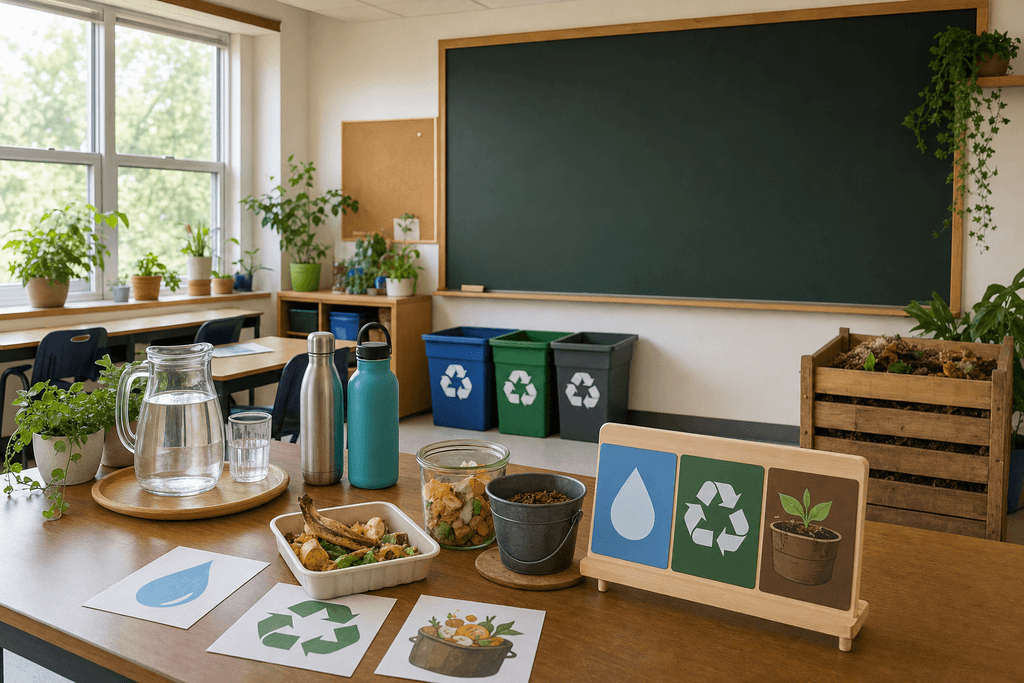
Every school day, millions of students throw away half-eaten lunches, leave classroom lights blazing, and use enough paper to fill entire recycling bins. These small actions add up fast, but here’s the good news: schools are actually the perfect training ground for sustainable living because kids who learn green habits early carry them home and into their futures. Whether you’re a teacher, administrator, or parent looking for practical sustainability tips, understanding why schools matter so much in this movement is the first step toward real change.
Table of Contents
- The Current State of Sustainability in Schools
- Simple Waste Reduction Strategies That Work
- Energy and Water Conservation Made Easy
- Building Green Habits Through Education and Engagement
- The Ripple Effect of School Sustainability Programs
- Taking the First Step Toward a Greener School
- Common Questions About School Sustainability
The Current State of Sustainability in Schools
Schools across America throw away enough food each year to fill 40,000 garbage trucks, and that’s just the beginning of the waste problem. Educational facilities consume massive amounts of energy, water, and paper while producing mountains of trash that end up in landfills. The typical school building uses about 30% more energy than it actually needs, which means money and resources are literally being wasted every single day. Most schools weren’t built with sustainability in mind, and changing old habits takes time, effort, and the right approach.
Understanding School Resource Consumption
The numbers tell a pretty clear story about where schools stand right now. When you look at what schools use and throw away each day, it becomes obvious why sustainable living practices matter so much in educational settings.
| Resource Type | Average Daily Amount | Annual Cost Impact |
|---|---|---|
| Food Waste | 39.2 pounds per school | $9,700 per school |
| Paper Usage | 2,000 sheets per classroom | $45,000 per school |
| Energy Consumption | 68 kWh per student yearly | $150,000 per school |
| Water Usage | 15 gallons per student daily | $12,000 per school |
Growing Environmental Awareness
Students today care more about the planet than any generation before them. They see climate change in the news, learn about pollution in science class, and want to do something about it. Teachers are noticing this shift too, with more educators looking for ways to bring sustainability tips into their daily lessons and school operations.
Here’s what’s changing in schools right now:
- Students are asking for recycling programs and composting options in cafeterias
- Parent groups are pushing for healthier, more eco-friendly school supplies
- School boards are starting to see the money they can save with energy-efficient upgrades
- Teachers are connecting environmental topics across different subjects
Success Stories Worth Noting
Some schools have already figured out how to make sustainability work. Research shows that education for sustainable development creates lasting behavioral changes in students that extend beyond the classroom. These early adopters prove that change is possible when schools commit to it.
Schools that have made progress share some common approaches:
- They started small with one or two easy changes instead of trying to do everything at once
- They got students involved in planning and running sustainability programs
- They tracked their progress with simple measurements everyone could understand
- They celebrated wins publicly to keep momentum going
Organizations like PureHabitat Initiative work directly with schools to provide the resources and education needed to make these changes stick. The gap between knowing what to do and actually doing it is where most schools get stuck, but the right support system makes all the difference.
Simple Waste Reduction Strategies That Work
Schools generate about 530,000 tons of food waste and 1.6 million tons of total waste each year in the United States alone. That’s a staggering amount when you think about it, especially since most of this waste could be reduced or diverted from landfills with some simple changes. The good news is that cutting down on waste doesn’t require a complete overhaul of how your school operates. Small, practical steps can make a real difference, and students often become the biggest champions of these changes once they understand why they matter.
Simple Waste Reduction Strategies That Work
Getting started with waste reduction is easier than most people think. The key is to focus on systems that students and staff can actually use without adding a bunch of extra work to their day.
Here are the most effective waste reduction strategies schools can implement right away:
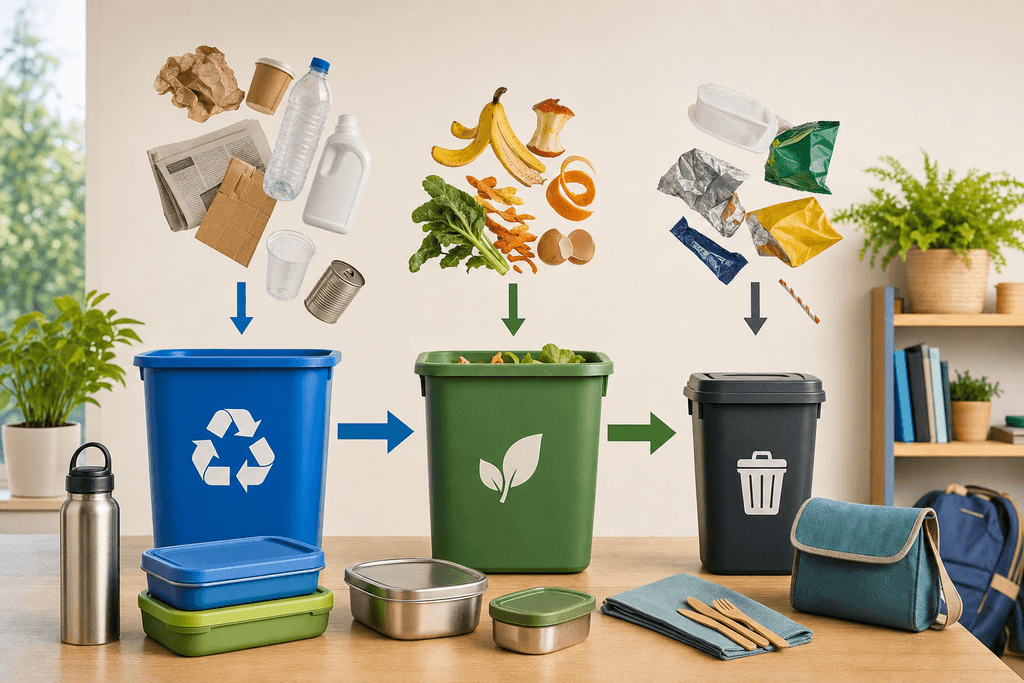
- Set up clear recycling stations in hallways, cafeterias, and classrooms with simple labels showing what goes where
- Start a composting program for cafeteria scraps and uneaten food, which can later be used in school gardens
- Replace single-use plastics with reusable trays, utensils, and water bottles throughout campus
- Create supply sharing systems where students can exchange or donate gently used materials instead of throwing them away
- Launch waste-free lunch days where students bring lunches in reusable containers and compete to see which class produces the least trash
- Teach proper sorting skills so students know the difference between recyclables, compostables, and actual trash
One middle school in Oregon reduced their cafeteria waste by 60% in just three months by implementing a simple three-bin system and having student volunteers help their peers sort correctly during lunch. The students took ownership of the program and even started tracking their progress on a big chart in the hallway.
☐ Audit current waste to see what you’re throwing away most
☐ Place bins in high-traffic areas where students naturally gather
☐ Use pictures on bins, not just words, so younger students understand
☐ Assign student monitors to help during the first few weeks
☐ Track and share progress monthly to keep momentum going
Energy and Water Conservation Made Easy
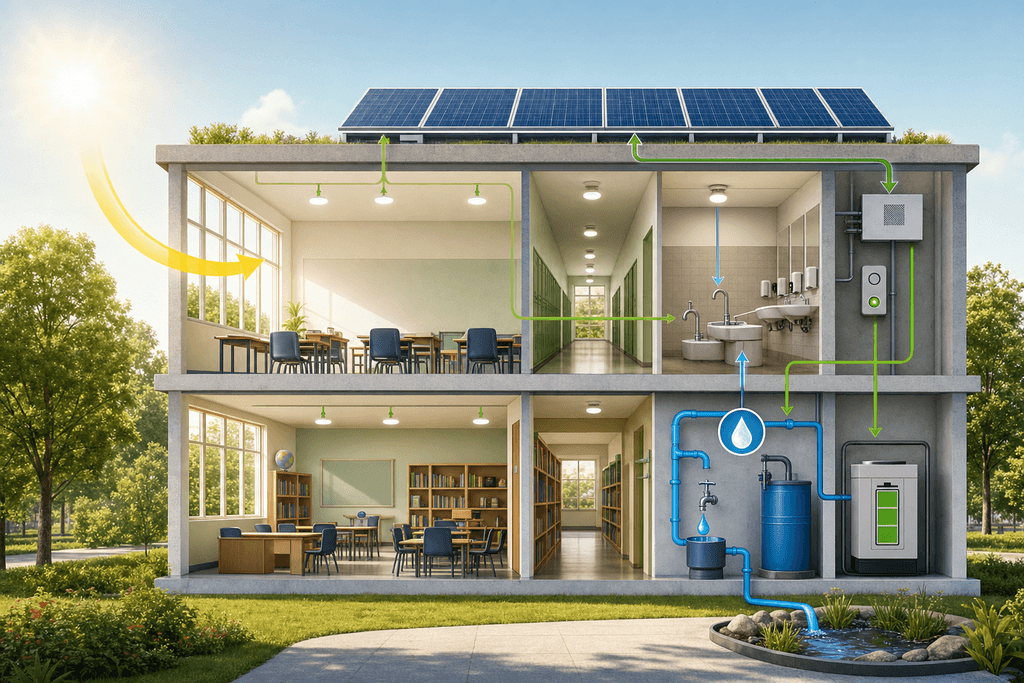
The average school building wastes about 25% of the energy it uses, which translates to thousands of dollars that could be spent on books, supplies, or programs instead. Water waste is just as common, with leaky faucets and running toilets often going unnoticed for weeks or months. But here’s what most schools don’t realize: the biggest energy savings don’t come from expensive upgrades or solar panels. They come from changing daily habits and paying attention to the small stuff that adds up over time.
Energy and Water Conservation Made Easy
Simple behavioral changes can cut energy costs by 10-20% without spending a dime on new equipment. It’s about creating awareness and giving students a sense of responsibility for their school environment.
The most impactful conservation practices include:
- Turning off lights and computers at the end of each class period and before leaving for the day
- Opening blinds and using natural light whenever possible instead of relying on overhead fluorescents
- Installing motion sensors in bathrooms and storage areas where lights often get left on accidentally
- Fixing leaks immediately rather than waiting for scheduled maintenance, since a single dripping faucet wastes 3,000 gallons per year
- Unplugging devices that aren’t in use, because phantom energy drain accounts for up to 10% of a building’s electricity use
- Creating student energy teams who do weekly walkthroughs to spot waste and report problems
- Taking classes outside when weather permits to reduce heating, cooling, and lighting needs
Did You Know?
Schools that implement student-led energy monitoring programs see an average reduction of 15% in electricity costs within the first year. That’s enough savings to fund field trips, new technology, or teacher resources.
Organizations like Conservation International offer free resources on sustainable living tips that can help schools develop their conservation programs. At PureHabitat Initiative, we work directly with schools to provide educational materials and hands-on training that makes these concepts stick with students long after they leave the classroom.
Building Green Habits Through Education and Engagement
Teaching sustainability isn’t just about telling students to recycle or turn off lights. It’s about helping them understand why these actions matter and giving them real ways to make a difference. When students feel like they’re part of something bigger than themselves, they don’t just follow rules because they have to. They become advocates who carry these habits home and into their communities. The most successful school sustainability programs are the ones where students lead the charge, not just follow along with what adults tell them to do.
Making environmental education stick requires more than a one-time assembly or poster campaign. It needs to be woven into everyday learning and connected to things students actually care about.
Effective approaches to building lasting green habits:
- Integrate sustainability into existing subjects like math (calculating carbon footprints), science (studying local ecosystems), and social studies (exploring environmental justice)
- Support student-led clubs that organize campus cleanups, run awareness campaigns, and propose policy changes to school administration
- Run friendly competitions between classrooms or grade levels to see who can reduce waste or save the most energy each month
- Build school gardens where students grow food, learn about composting, and see the full cycle of sustainable food systems
- Connect lessons to careers in renewable energy, environmental science, urban planning, and other green fields students might not know exist
- Partner with experienced organizations like PureHabitat Initiative that provide ready-made curriculum, training workshops, and ongoing support for teachers
- Celebrate progress publicly through newsletters, social media, and school assemblies so everyone sees the impact they’re making
A high school in California started a sustainability club that now has over 100 members and has helped the school eliminate single-use plastics, install water bottle refill stations, and create a thriving garden that supplies produce to the cafeteria. The students didn’t just learn about environmental issues in theory. They saw firsthand how their actions created measurable change, which motivated them to keep going and think bigger.
Real Success Story:
An elementary school in Texas partnered with PureHabitat Initiative to launch a comprehensive sustainability program. Within one school year, they reduced cafeteria waste by 45%, cut energy costs by $3,200, and saw student engagement in environmental topics increase dramatically. Teachers reported that students started bringing sustainability ideas home and influencing their families’ habits too.
The Student Sustainable Living Guide offers additional insights into how young people can adopt eco-friendly practices in their daily routines. What makes school-based programs so powerful is that they reach students during their formative years when habits are still being shaped. When you give kids the knowledge and tools to live sustainably, you’re not just changing one school. You’re creating a generation that thinks differently about their relationship with the environment and carries those values forward into adulthood.
The Ripple Effect of School Sustainability Programs
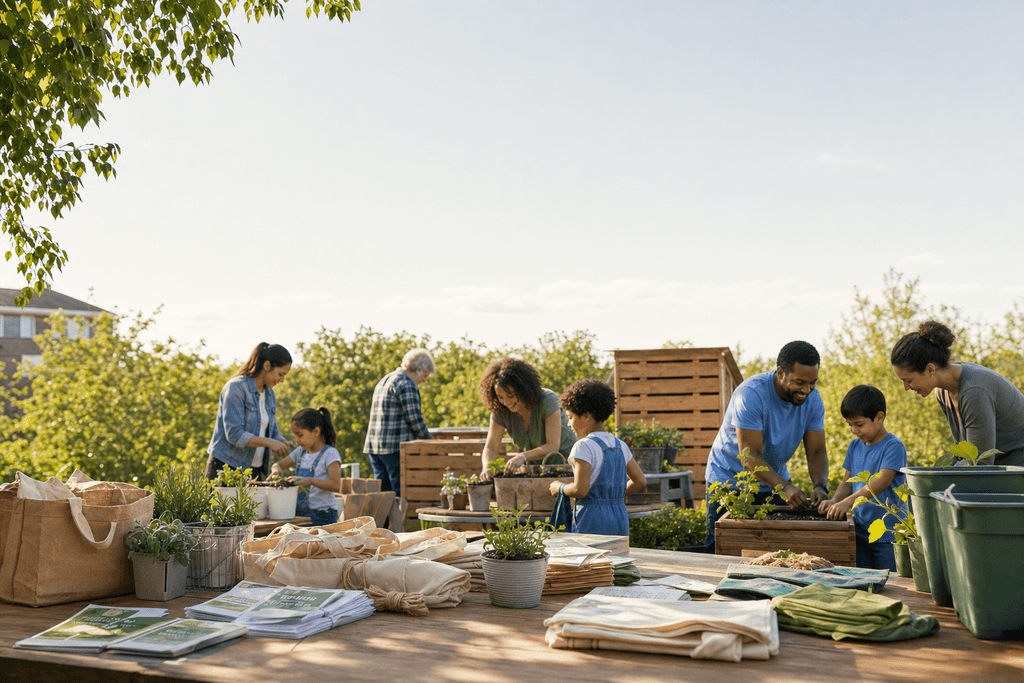
When a child learns to recycle at school, something interesting happens at home. That student becomes a teacher, showing parents and siblings how to sort waste properly. This pattern repeats across thousands of households, creating a wave of change that extends far beyond classroom walls. School-based sustainability programs don’t just educate young people about environmental responsibility. They create a multiplier effect that touches entire communities, reshapes family habits, and builds momentum for long-term environmental progress.
How Students Bring Change Home
Kids are natural advocates for what they learn in school. When they discover sustainable living tips through educational programs, they often become the most vocal champions of these practices at home. Research from the Environmental Protection Agency shows that student-led initiatives frequently result in household behavior changes that parents wouldn’t have adopted on their own.
- Students remind family members to turn off lights and unplug devices
- Children request reusable containers for school lunches instead of disposable packaging
- Young people influence household purchasing decisions toward eco-friendly products
- Kids share sustainability tips learned at school during family discussions
Economic and Health Benefits That Matter
The financial impact of school sustainability programs extends into community budgets and family wallets. Schools that reduce waste and energy consumption save money that can be redirected to educational resources. These savings demonstrate practical value that resonates with administrators and parents alike.
| 30-40% | Average reduction in school waste |
| 15-25% | Energy cost savings reported |
| 3x | Household adoption multiplier |
Cleaner school environments lead to measurable health improvements. Reduced air pollution from better waste management and energy efficiency correlates with fewer respiratory issues among students. These health outcomes create a compelling case for expanding sustainability education.
Building Community Wide Momentum
School programs serve as anchors for broader community adoption of sustainable practices. When multiple families in a neighborhood start composting or reducing single-use plastics because their children learned about it at school, local businesses take notice. This creates demand for eco-friendly products and services that wouldn’t exist otherwise.
- Schools model sustainable practices that nearby organizations replicate
- Parent volunteers spread knowledge through community networks
- Local businesses respond to increased demand for sustainable options
- Neighborhood associations adopt similar programs based on school success
Organizations like PureHabitat Initiative support these school programs through resource sharing and environmental education, helping communities build the infrastructure needed for lasting change. The long-term environmental impact of educating young people compounds over decades as these students carry sustainable living habits into adulthood and pass them to future generations.
Taking the First Step Toward a Greener School
Making your school more sustainable doesn’t have to be complicated or expensive. The easiest changes to start with are the ones that cost nothing, like turning off lights when leaving a room, starting a recycling program, or organizing a carpool system. These small actions might seem simple, but when everyone in a school community participates, the impact adds up faster than you’d think.
The real magic happens when students, teachers, and administrators work together instead of trying to tackle everything alone. A fifth grader who notices food waste in the cafeteria can team up with a teacher to start a composting program. An administrator who sees high energy bills can partner with students to create an energy monitoring team. Collaboration turns individual ideas into school-wide habits that stick around for years.
If you’re wondering where to find support for these efforts, PureHabitat Initiative offers educational programs and resources specifically designed to help schools adopt sustainable living practices. We work with schools to provide the tools and knowledge needed to make sustainability tips actually work in real-world settings, not just on paper.
The path to a greener school starts with one small decision. Pick the easiest change from this guide and try it next week. Once you see how simple it can be, the next steps won’t feel so overwhelming.
Common Questions About School Sustainability
Schools across the country are looking for ways to build better habits around environmental care, but questions often pop up before anyone takes the first step. Getting clear answers helps teachers, administrators, and parents move forward with confidence instead of staying stuck in the planning phase. These are the questions we hear most often from schools ready to make sustainable living a real part of their campus culture.
How much does it cost to start a school sustainability program?
Most schools can start with zero budget by focusing on behavior changes like turning off lights, reducing paper waste, and starting simple recycling systems. The biggest wins often come from changing habits rather than buying new equipment. When schools are ready to invest, grants from environmental organizations and partnerships with nonprofits like PureHabitat Initiative can provide resources and educational materials at little to no cost. Many sustainability tips don’t require fancy technology or expensive upgrades.
What are the quickest wins for schools new to sustainability?
Setting up clearly labeled recycling bins throughout campus usually shows results within weeks, and students can see their impact right away. Switching to reusable lunch trays instead of disposables cuts waste dramatically and often saves money over time. Another fast win is creating a “lights off” campaign where student volunteers check empty classrooms at the end of each day. These simple changes build momentum without overwhelming staff or requiring major policy changes.
How can we get students excited about environmental initiatives?
Students respond best when they have ownership over projects rather than just following adult instructions. Let them design posters, lead campus audits, or compete in waste reduction challenges between classrooms. PureHabitat Initiative offers environmental education programs that give students hands-on training they can actually use to lead their peers. When kids see real data about how much waste they’ve diverted or energy they’ve saved, the numbers make it feel real instead of abstract.
What resources are available for schools starting sustainability programs?
Nonprofit organizations focused on sustainable living provide free curriculum guides, workshop materials, and even on-site training for teachers and students. PureHabitat Initiative specifically works with schools through resource sharing and community empowerment programs designed to make eco-friendly practices accessible. Local environmental groups often have volunteers willing to speak at assemblies or help with specific projects like garden installations or energy audits.
How do we measure the success of our sustainability efforts?
Track simple metrics like pounds of waste diverted from landfills, gallons of water saved, or kilowatt hours reduced each month. Student and staff surveys about awareness and behavior changes give you qualitative data that numbers alone can’t capture. The goal isn’t perfection but progress, so comparing your school’s current habits to where you started shows real impact over time.
Can small schools make a real difference?
A single small school might seem like a drop in the bucket, but students take these sustainability tips home to their families and spread habits throughout entire communities. Small schools often have an easier time implementing changes because everyone knows each other and communication moves faster. When multiple small schools in a district adopt similar practices, the collective impact adds up quickly and creates a culture shift that reaches far beyond campus boundaries.